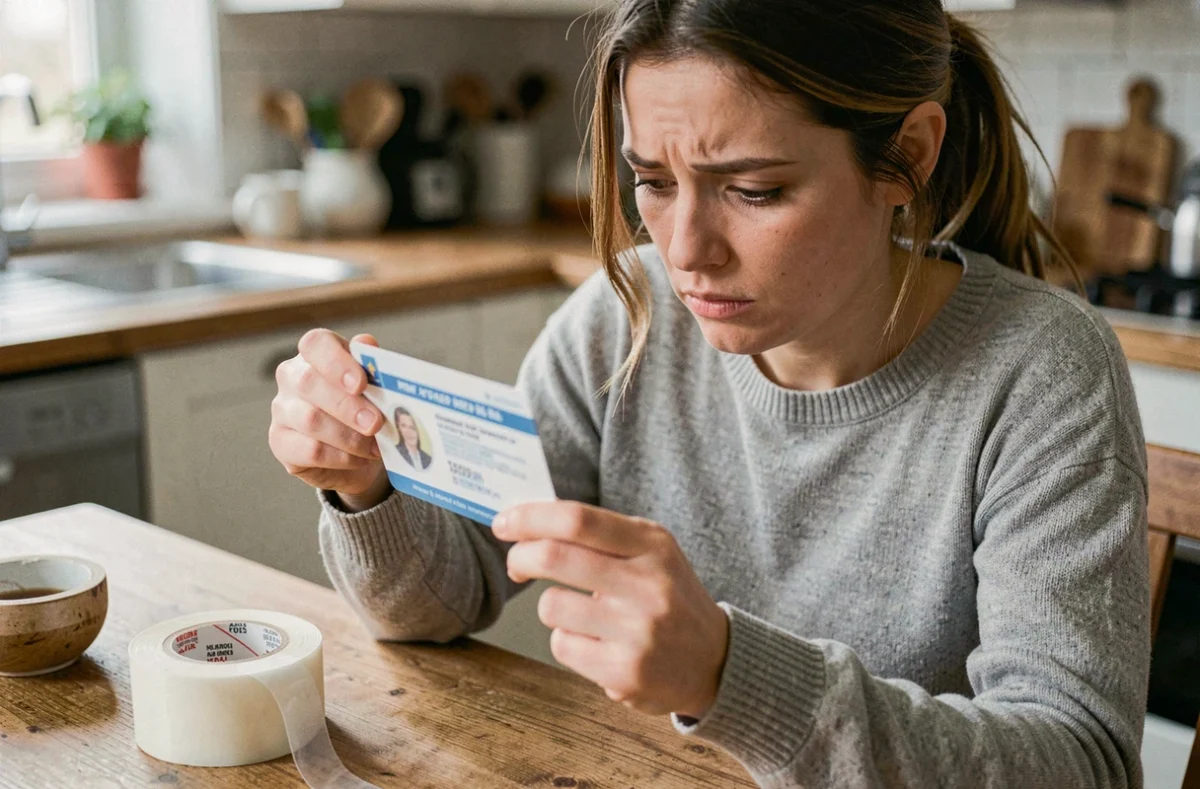
Choosing the wrong tape or applying it incorrectly to a driving licence can cause more damage than wear and tear itself. The adhesive can lift the ink, leave sticky residue on the ID photo or obscure the document’s security features. Before reaching for a roll of tape, it’s important to understand what’s at stake on the licence’s surface and what a roadside check actually requires in terms of legibility.
Driving licence surface: what adhesive can damage
A bank card-sized driving licence consists of several technical layers. The photo, printed details and, above all, the security holograms are sandwiched between plastic films heat-laminated together. This structure makes the document difficult to counterfeit.
Applying adhesive directly to this surface creates two distinct problems. First, the glue on standard tape (such as clear office tape) bonds strongly to the laminated coating. When removed, it can take tiny fragments of the printed layer or laminate with it.
Second, if the tape covers a hologram or part of the photograph, the document can no longer be authenticated during a check. An officer who cannot verify the hologram or identify the licence holder is entitled to consider the document suspicious.
We recommend never applying adhesive directly to the printed side. The reverse, which lists the licence categories, is just as sensitive: codes and dates must remain perfectly legible.
For anyone who still wants to protect their driving licence with tape, the choice of product and application method make all the difference.
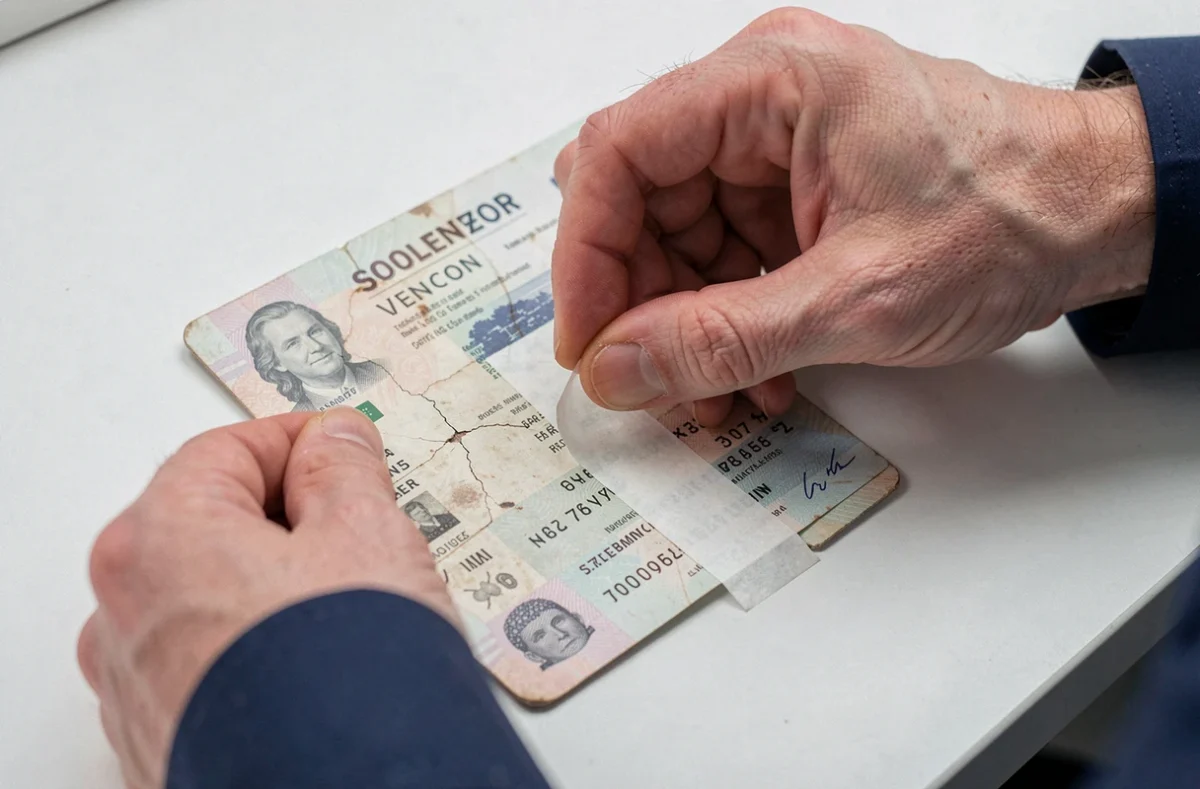
Tape on a driving licence: types of adhesive and associated risks
Not all adhesive tapes are created equal. The main issue is the type of glue and how it behaves over time.
- Standard clear tape (polypropylene with acrylic adhesive): strong adhesion, yellows within a few months, and leaves sticky residue that is almost impossible to remove cleanly. Avoid using it on an official document.
- Removable adhesive tape (such as Post-it tape): weak adhesive that offers no protection against mechanical wear. It will come unstuck on its own after a few days in a wallet.
- Cold-lamination film (self-adhesive transparent pouch): designed to cover documents without heat. This is the only option that provides mechanical protection without aggressive adhesive coming into direct contact with the printed area, provided the document is fully enclosed and the edges overlap so the adhesive only sticks to itself.
- Cling film: no adhesive, but no staying power either. It slips around and offers no protection.
Cold lamination is the least risky compromise. It forms a clear sleeve around the licence without the adhesive touching the printed surface. Credit card-sized pouches are available at stationery shops.
Common mistake: covering a crack with office tape
A licence cracked at the corner can prompt an instinctive reach for adhesive tape. Tape holds the two parts together, but creates a raised edge that catches in a wallet and eventually peels off, taking material with it. On an already weakened licence, removing the tape makes the original damage worse.
If the crack is superficial and all the information remains legible (clear photo, name, date of birth, categories and intact hologram), the licence is still usable as it is. It’s better to put it in a clear, rigid holder than to try to patch it with adhesive.
Cracked or peeling licence: repair it yourself or request a replacement
The question of when to stop attempting a home repair and request an official replacement arises as soon as the document shows signs of structural wear.
When a worn licence is still valid
A licence with slightly chipped edges, minor scratches on the plastic or a cracked corner that does not affect the information remains a valid driving document. No regulation requires it to be in perfect cosmetic condition. The legibility of the information and the integrity of the hologram are the two decisive criteria.
In this case, the most effective protection is a rigid card holder that prevents further bending. No tape, no glue, and no handling of the document.
When to stop repairing it and request a duplicate
Replacement becomes the only reasonable option in several specific situations:
- The photograph is partly worn away or covered in residue (including glue from old tape).
- The hologram is peeling, deeply scratched or missing in part.
- The licence is broken into two pieces, even if the information on both sides remains legible.
- The details (name, date, categories) have become illegible due to wear, fading or water damage.
You can request a duplicate through the ANTS (Agence nationale des titres sécurisés) website. The online process requires a digital ID photo, proof of address and a photo of the damaged licence. A damaged licence does not mean losing any categories or points: the duplicate carries over all the rights of the original document.
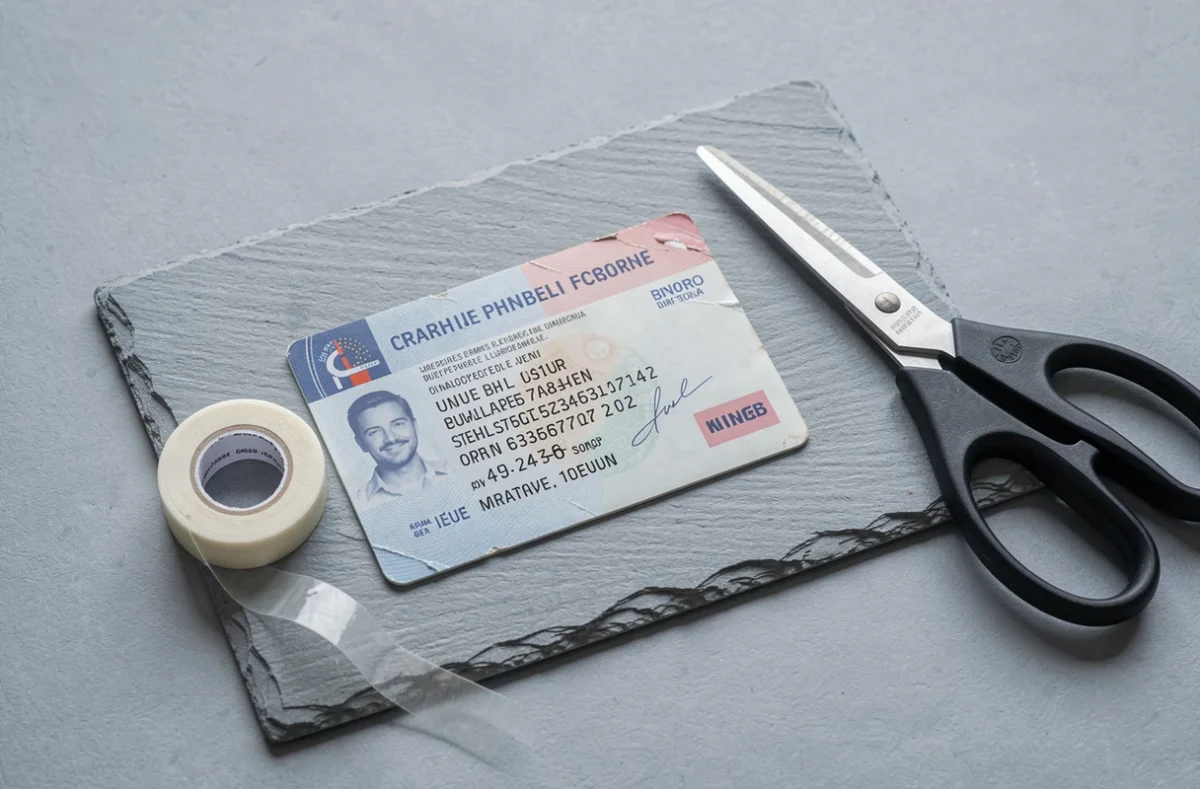
Long-lasting driving licence protection: alternatives to tape
Rather than repairing damage after the fact, protecting the licence as soon as you receive it avoids the risk altogether. A clear, rigid holder in bank card size remains the most reliable method. It absorbs impacts, prevents bending and never comes into adhesive contact with the document.
Cold-lamination pouches, when applied correctly (document centred, adhesive margins only along the outer edges), offer comparable protection. However, they add a little thickness, which may be inconvenient in some slim card holders.
Whatever its quality, tape was not designed for identity documents. A holder protects without touching the surface; adhesive touches it and eventually damages it. For a document that remains valid for several years, the choice is an easy one.