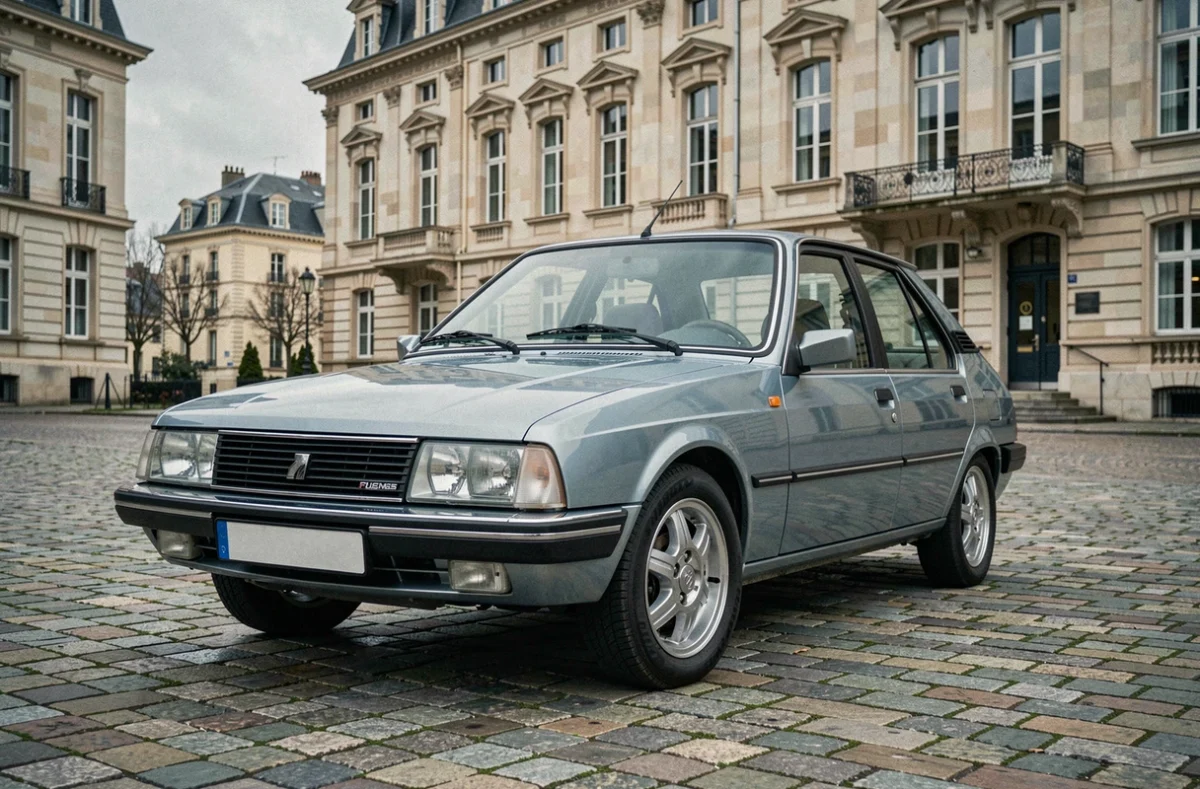
The Renault 30 TX is not just a sedan from the 1970s. It is the car that brought the six-cylinder engine back to Renault after four decades of absence, featuring a mechanical architecture that few French manufacturers dared to adopt at the time. Understanding its technical performance is to grasp why it remains a landmark in the history of French automobiles.
PRV Engine of the Renault 30 TX: A Rare Industrial Cooperation
Have you heard of the PRV engine? These three letters refer to a V6 designed collaboratively by Peugeot, Renault, and Volvo. This type of collaboration between competing manufacturers remains an almost unique case in the automotive industry.
Specifically, the engine of the Renault 30 TX is a front-mounted V6 driving the front wheels. This is called a front-wheel drive V6 engine, a configuration that posed real challenges for balance and handling at the time. The weight of the block, concentrated in front of the axle, required specific work on the suspension systems.
The TX version stands out from the TS by its fuel injection system, which appeared in 1978. Fuel injection replaces carburetors and improves both engine response and operational consistency. For the driver, this translates to more responsive acceleration and better-controlled fuel consumption at a steady speed.
Before going further, it is worth noting that Clean Auto Metz’s services detail these technical characteristics in a complementary way for enthusiasts of the model.
Renault 30 TX and Two-Body Design: A Deliberate Technical Choice
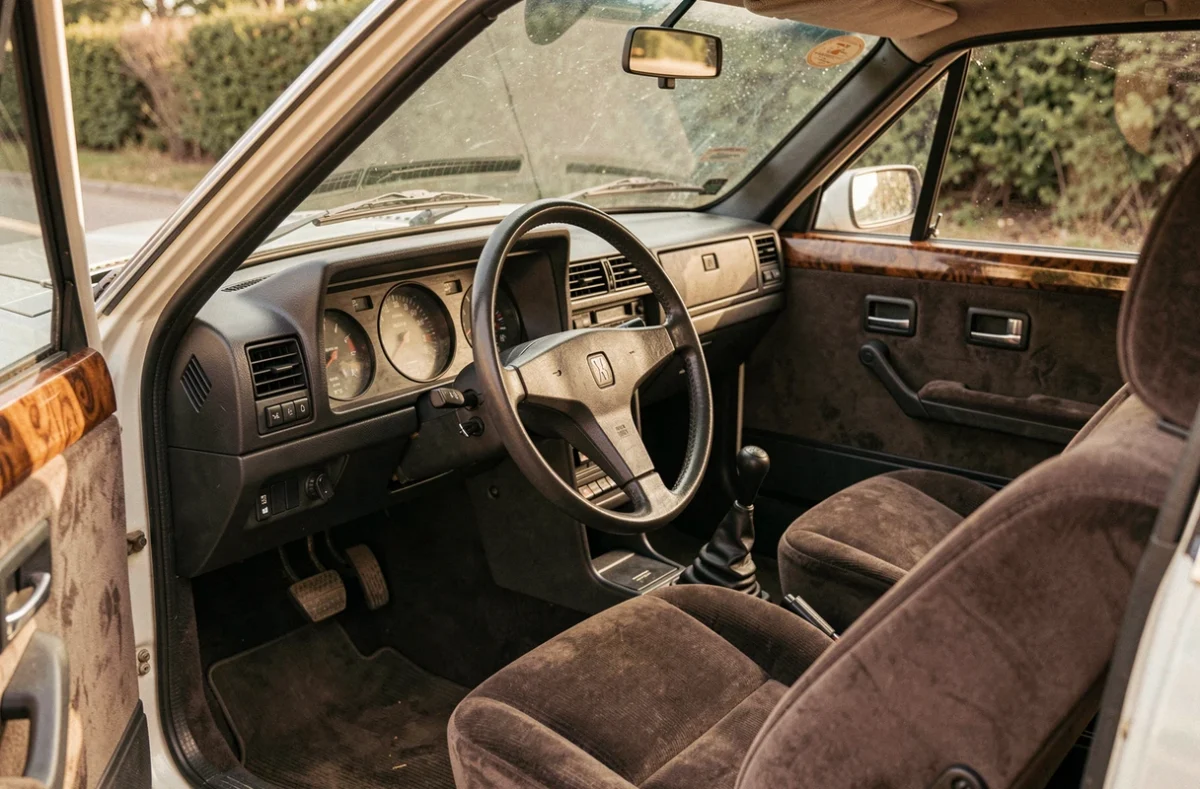
In the 1970s, most large sedans adopted a three-box profile: a hood, a passenger compartment, and a distinctly separated trunk. Renault made a different choice with the R30. Its two-body design extends the roofline to an inclined rear hatch.
Why this choice? The two-body design offers a significantly larger modular loading volume. By folding down the rear seat, the R30 TX transforms into a spacious touring car capable of accommodating luggage that a traditional sedan could not hold. This is the direct legacy of the Renault 16, a pioneer of the genre.
The design by Gaston Juchet favors roundness where the Peugeot 604, launched the same year with the same PRV engine, opts for angular edges. This aesthetic choice divided opinions at the time, but it has aged quite well.
Differences Between Renault 20 and Renault 30
The two models share the same basic body. The R30 can be recognized by its grille with four round headlights and a more luxurious level of equipment. In terms of engine options, the R20 is limited to four cylinders in most of its versions, while the R30 TX exclusively features the PRV V6 with fuel injection.
Classic Vehicle Status for a Renault 30 TX: What It Changes
A R30 TX is now over forty years old. It can therefore qualify for classic vehicle status, provided it meets certain specific criteria. This status concretely alters the daily life of the owner.
To obtain it, the model must no longer be produced for at least thirty years, the car must not have undergone significant modifications, and a certificate must be issued by the FFVE (Fédération Française des Véhicules d’Époque), followed by a process with the ANTS.
Here is what this status brings in practice:
- A technical inspection every five years instead of two years, which eases the administrative maintenance schedule
- A possible exemption for circulation in ZFE (low emission zones), depending on the local regulations in force
- Some tolerances adapted to the age of the vehicle during the inspection, even though safety components (brakes, steering, suspension, structure) are still examined normally
Technical Modifications and Loss of Eligibility
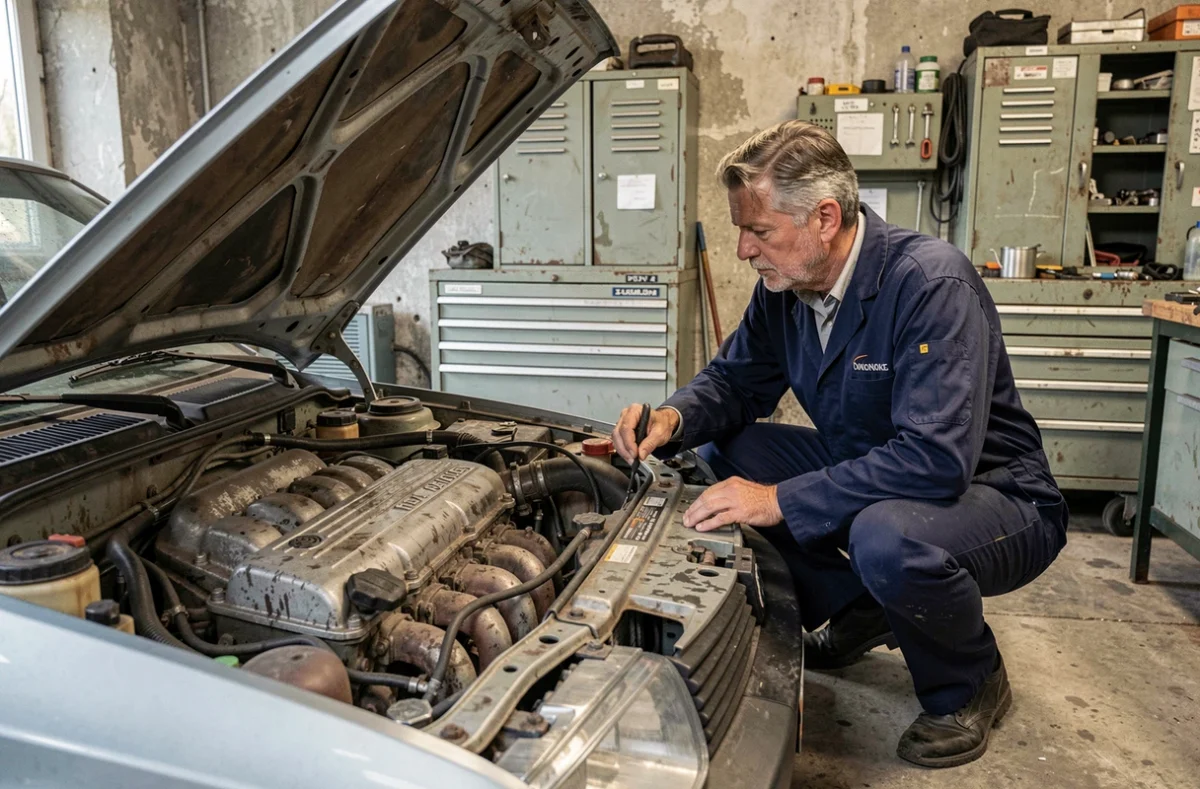
One point deserves special attention. Any major modification can jeopardize access to classic status. Replacing the engine with a non-compliant block, altering the chassis, or redesigning the braking system can render the car ineligible, even if it still resembles an original R30 TX.
In short, maintaining mechanical authenticity is not just a matter of purism. It is an administrative requirement.
Checking a Renault 30 TX Before Purchase: Beyond the Mechanics
For a model of this age, a standard mechanical examination is not enough. The R30 TX has long carried a reputation for susceptibility to corrosion. The points to watch go well beyond the engine.
- The legibility of the chassis and engine numbers is checked during the technical inspection: illegible or altered numbers pose a serious administrative problem
- The HistoVec report allows for comparing the declared mileage during previous inspections with the actual condition of the vehicle
- The condition of the supporting structure, the side rails, and the wheel arches reveals the true history of corrosion, often masked by cosmetic treatments
Administrative traceability is as important as mechanical condition for this type of vehicle. An incomplete or inconsistent file makes resale difficult and can block classic registration.
Insurance and Daily Use
With a classic registration, insurance contracts differ from standard formulas. They take into account limited use (no commuting, capped annual mileage according to insurers). In return, the rates are generally lower than for a standard vehicle of the same engine size.
The Renault 30 TX embodies a specific moment in French industrial ambition: a V6 born from an alliance between three manufacturers, housed in a body that rejected the conventions of its time. Its technical performance is better appreciated when one considers the constraints that its engineers had to solve, and its classic status today offers a concrete framework for keeping it on the road.