
Real estate listing platforms rank properties according to algorithms that prioritize publication freshness, the seller’s advertising budget, and compliance with the average price ranges in the sector. An undervalued or atypical property mechanically drops in the results. An agency that masters these sorting mechanisms does not simply consult the same portals as the buyer: it corrects visibility biases to identify what the apparent market does not show.
Algorithmic Biases of Real Estate Portals and Filtering by an Expert Agency
Advertisement aggregators operate on an advertising model. The highlighted properties are those for which agents pay for premium positioning or those that match the median price ranges of the sector. An apartment whose price per square meter deviates from the local average, even downward, receives less visibility because the algorithm considers it atypical.
We observe this phenomenon on most French portals. Undervalued properties are penalized by automatic filters, as their price triggers signals of algorithmic distrust (too high a standard deviation compared to the neighborhood, less standardized photos, short descriptions). The result: the buyer who limits themselves to the first two pages of results misses out on gems ranked on page five or six.
An expert agency circumvents this problem in several ways. It accesses off-market stock before publication and sets alerts based on fine criteria that public portals do not offer (orientation, street quietness, potential for elevation). It also cross-references price data with its own databases of recent transactions.
To find a property with ALO Immobilier, this filtering and sourcing work upstream makes all the difference between a passive search and a guided search.
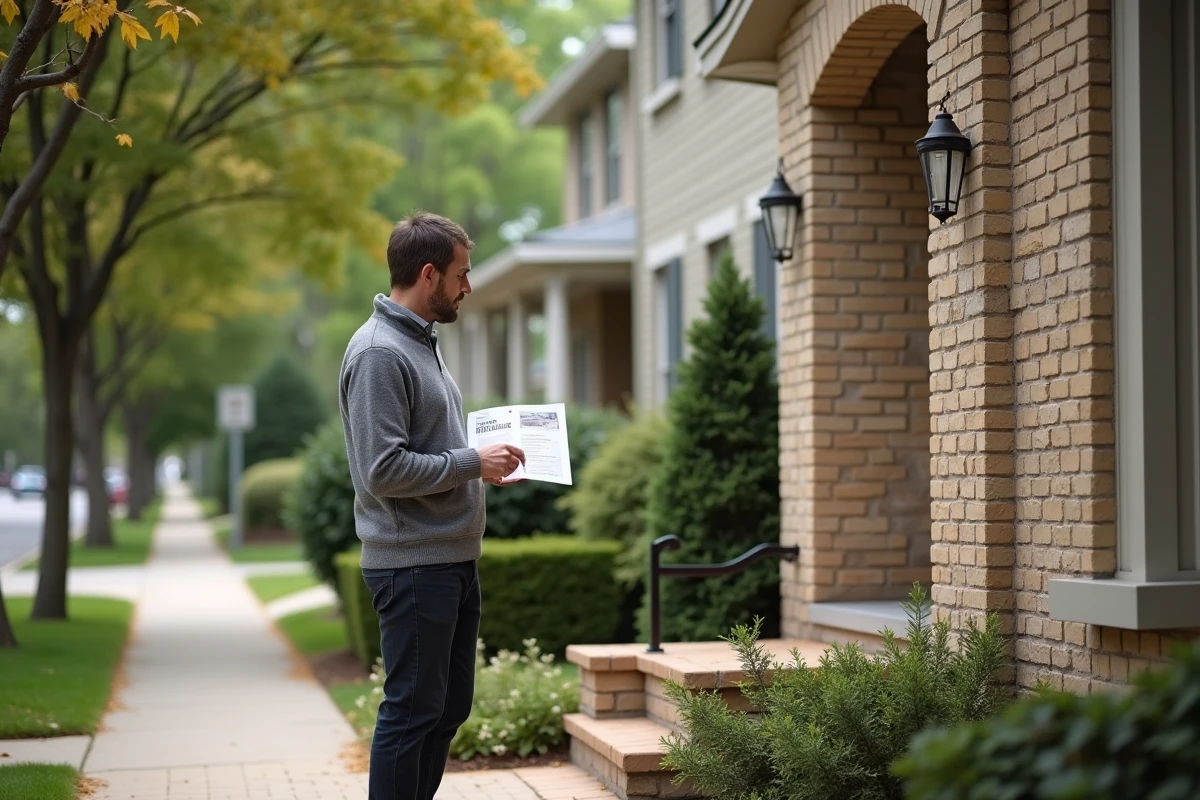
Estimation and Market Price: What the Agency Checks Before Showing You a Property
The majority of buyers consult online estimates to get an idea of the fair price. These tools rely on average prices per square meter by neighborhood, updated with a lag of several months. An automatic estimate does not take into account the actual condition of the lot, the co-ownership, or the works voted in the general assembly.
We recommend never basing a purchasing decision solely on an algorithmic estimate. An expert agency conducts systematic cross-checking:
- Consultation of comparable sales deeds within a restricted radius, over the last six months, via notarial databases
- Verification of general assembly minutes to identify upcoming calls for funds (facade renovation, elevator compliance, roof repair)
- Analysis of the actual energy performance diagnosis compared to the displayed DPE, which may mask mandatory insulation works in the short term
- Evaluation of rental or resale potential based on the local urban planning plan and municipal development projects
This verification work transforms a listing into an investment file. The agency does not show you a property: it presents you with a documented arbitration.
Targeted Real Estate Search: Property Hunter or Local Agency
The property hunter and the local agency do not cover the same risk perimeter. The hunter works exclusively for the buyer, with a search mandate. The local agency holds sales mandates and knows the available stock before it goes online.
The choice depends on the type of property sought. For a purchase in a specific geographic area (a street, a building, a subdivision), the local agency has a structural advantage: it knows the owners, the turnover, the ongoing successions. For a multi-sector or interregional search, the hunter provides broader coverage.
Selection Criteria for an Agency for Effective Search
Experience in the sector matters less than the quality of the active portfolio. An agency that holds a high proportion of exclusive mandates accesses properties before they are published on portals. Check the ratio of exclusive mandates to simple mandates: a high rate of exclusive mandates indicates a relationship of trust with local sellers.
Another rarely mentioned criterion: the agency’s responsiveness regarding visits. A properly priced property in a tight market sells in a few days. The agency that organizes a visit within 24 hours after listing offers a measurable competitive advantage compared to one that groups visits at the end of the week.

Real Estate Listings and Off-Market Market: Where to Find the Best Properties
The visible market (portals, agency windows, social networks) represents only a part of the stock actually available. The off-market concentrates properties sold without advertising, often because the seller desires discretion or because the agency already has a qualified buyer in its database.
Accessing the off-market requires being registered in the buyer file of one or more agencies, with a completed financing dossier. Agencies prioritize buyers whose financing plan is validated by a broker or a banking institution. Without this validation, the profile remains at the bottom of the callback list.
Preparing Your Dossier to Accelerate the Search
A complete dossier includes the financing eligibility certificate (not just a simple online simulation), the last three tax notices, savings account statements, and, if applicable, the sales agreement of the property currently being sold. This level of preparation is not administrative: it determines the speed at which the agency will offer you properties before other buyers in its file.
The real estate market rewards preparation, not patience. A solid dossier combined with an agency that filters the algorithmic biases of the portals allows access to properties that independent searches do not reveal. The difference between a buyer who searches and a buyer who finds often lies in this invisible work done upstream by the agency.