
In the age of hyperconnectivity, dependence on mobile devices is growing exponentially, making energy management a central concern. In this context, technological innovation has paved the way for solutions that allow energy sharing between devices. These advancements promise not only to optimize the use of energy resources but also to enhance the user experience. The ability to transfer charge from one device to another wirelessly, or via direct connections, is revolutionizing the way we interact with our gadgets and raises pertinent questions about the future of connectivity and the autonomy of mobile devices.
Recent Advances in Energy Sharing Among Mobile Devices
The Wireless PowerShare technology, developed by Samsung, represents a significant advancement in the field of energy sharing. This system allows a Samsung Galaxy smartphone to function as a wireless charging pad for other devices, such as Galaxy Buds wireless earbuds and the Galaxy Watch 3 smartwatch. The ease of use of this technology is remarkable: activation is done simply via the smartphone’s shortcut panel, making the energy sharing process both intuitive and immediate.
Samsung’s involvement in this technology is not limited to its own products. Indeed, the Galaxy S21 has demonstrated its ability to charge an Apple iPhone, thus highlighting the openness of Wireless PowerShare technology to interoperability between different brands. This reflects a desire for universality in energy sharing, all while adhering to the Qi standard, a wireless charging standard adopted by many electronic device manufacturers.
The reverse wireless charging technology raises questions about energy efficiency. While convenient, Wireless PowerShare does not achieve the efficiency of wired charging, generating heat that could affect the battery life of the devices involved. The charging speed proves to be less effective, inviting users to favor this method for occasional needs rather than for a full charge.
As for compatibility, the Qi standard requires prior verification before use with third-party devices. This forces users to ensure that their devices support this technology, potentially limiting the universality and spontaneity of energy sharing in some cases. Despite these constraints, Wireless PowerShare fits into an underlying trend where user convenience and interconnectivity of mobile devices take precedence, foreshadowing a future where access to energy will be as seamless as data transmission.
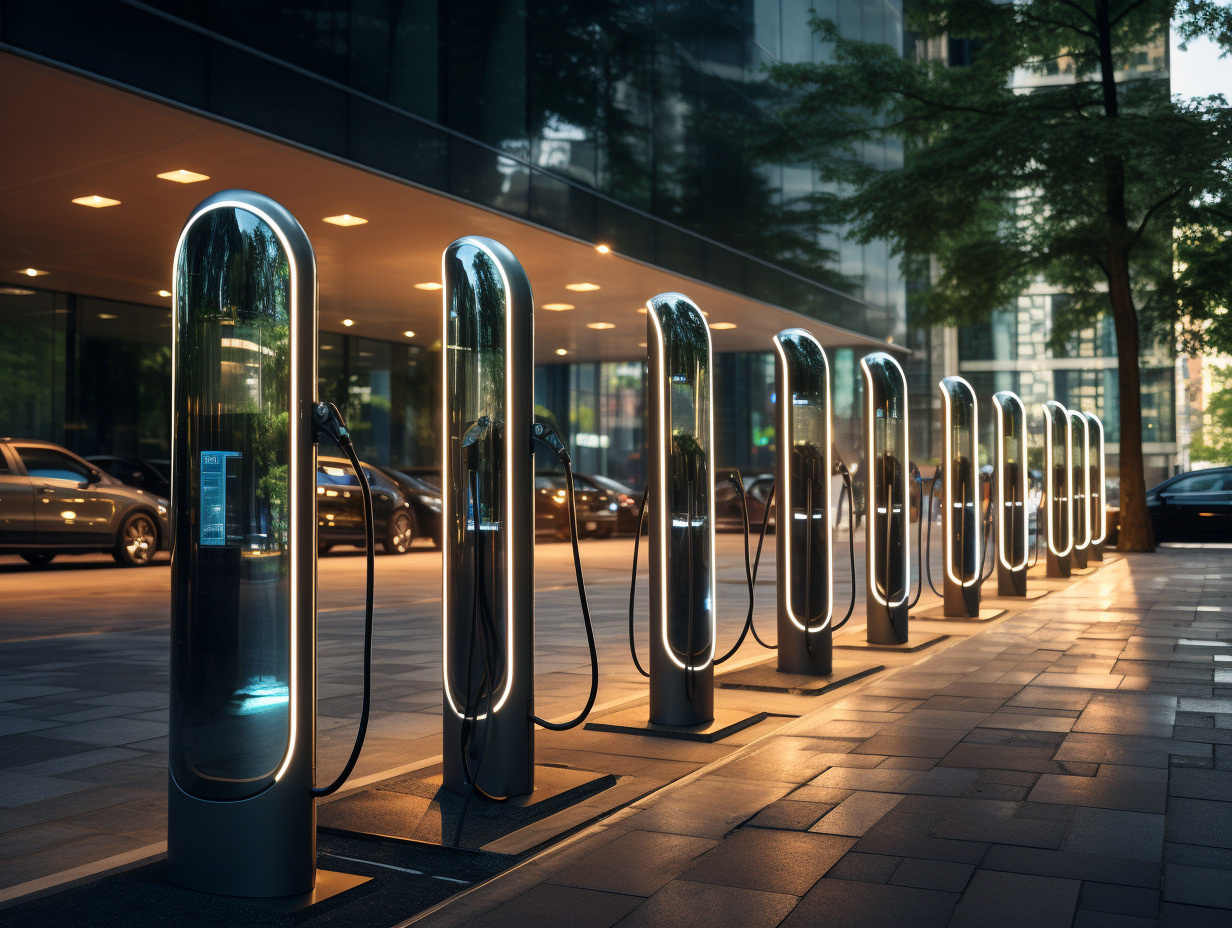
Impact and Future Perspectives of Mobile Energy Sharing
The Wireless PowerShare technology has paved the way for new energy consumption practices among mobile device users. The impact of this technology is not only measured in terms of convenience but also through its implications on battery life. Indeed, the generation of heat during reverse wireless charging can affect battery longevity, a factor to consider in the overall equation of energy efficiency.
The lower charging speed of reverse wireless technology compared to wired charging invites reflection on the optimal circumstances for energy sharing use. While this innovation offers a convenient troubleshooting solution, it cannot yet replace traditional charging methods for daily and intensive use. Manufacturers and engineers are therefore faced with the challenge of reconciling energy efficiency and ease of use.
The question of compatibility also arises, as the Qi standard is a prerequisite for device interoperability. The need to verify this compatibility may limit the universal adoption of energy sharing. However, the convergence towards common standards among manufacturers could facilitate this interaction in the future and potentially democratize the use of mobile energy sharing. Wireless PowerShare, in its current form, foreshadows a future where the flexibility of energy access for mobile devices will be as natural as the network connectivity that links them today.