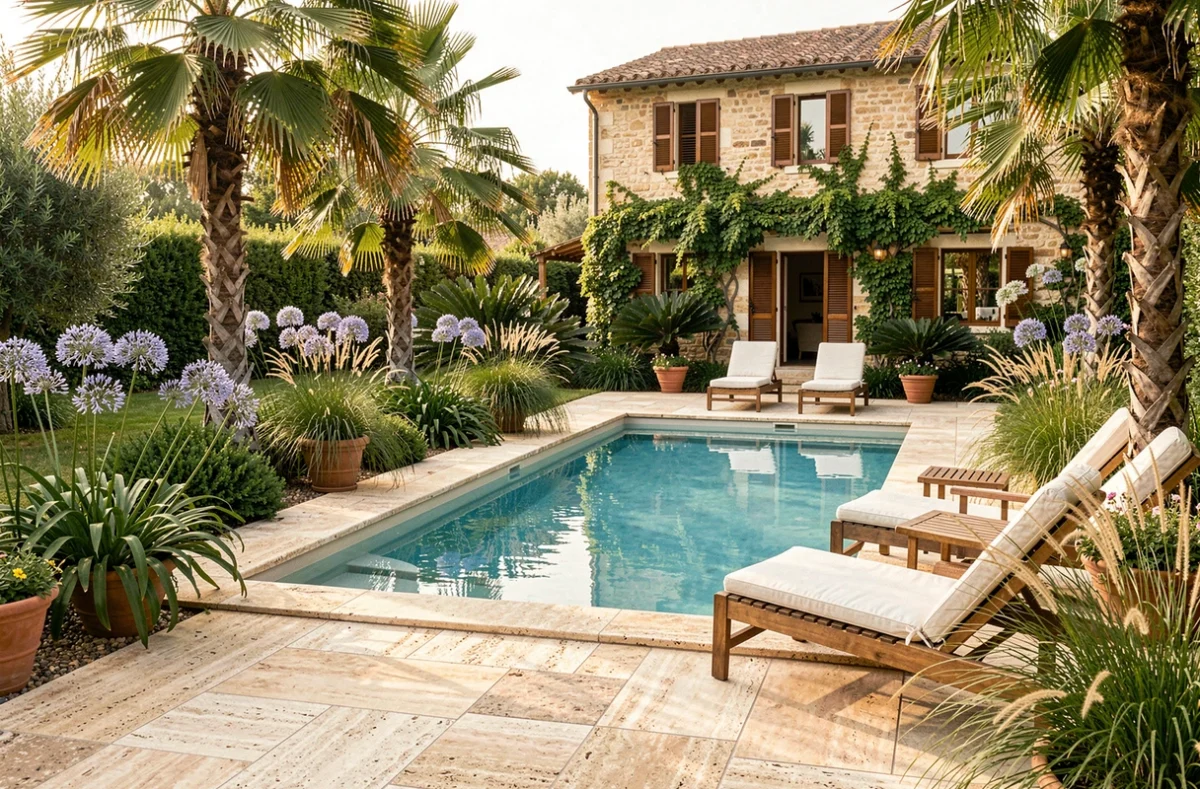
Landscaping the surroundings of an outdoor pool requires coordinating choices of materials, vegetation, and furniture that work together over the long term. The climatic context adds a constraint that many projects underestimate: during periods of drought, municipal regulations may limit the filling of private pools and the watering of gardens. Designing a coherent space around your pool also means anticipating these restrictions.
Here are ten practical tips to transform the area around your pool into a garden that lives up to its promises throughout the seasons.
1. Check local water restrictions before planting anything
Before choosing your plants or planning a fill-up, consult the VigiEau system for your municipality. In times of water crisis, watering gardens and filling pools may be simultaneously prohibited. The regulations also apply to above-ground pools and spas.
This verification conditions the rest of the project. If your municipality is regularly placed under drought alert, directing the landscaping towards water-efficient plants and a rainwater harvesting system is not a luxury, it’s a practical necessity.
A first fill-up after construction may be subject to local exceptions. You need to confirm the conditions in the regulation applicable to your municipality, as the rules vary from one area to another.
2. Choose a pool deck made of non-slip material
The deck is the transition area between the garden and the pool. The choice of material determines the safety of barefoot movement, the ground temperature in the height of summer, and the durability against chlorinated splashes. Before finding numerous tips for outdoor pool landscaping, one principle remains non-negotiable: the surface must be non-slip.
Reconstituted natural stone and composite wood offer two different approaches. Stone stays cooler longer under direct sunlight. Composite requires neither sanding nor annual treatment but can heat up more in full southern exposure.
Opt for a certified non-slip material class C for areas regularly wet around the pool.
3. Plant species adapted to chlorinated spray
Pool water splashes contain chlorine or salt depending on the treatment system. Not all plants tolerate these repeated sprays. Installing flower beds too close to the pool without considering this constraint leads to burnt foliage by the first summer.
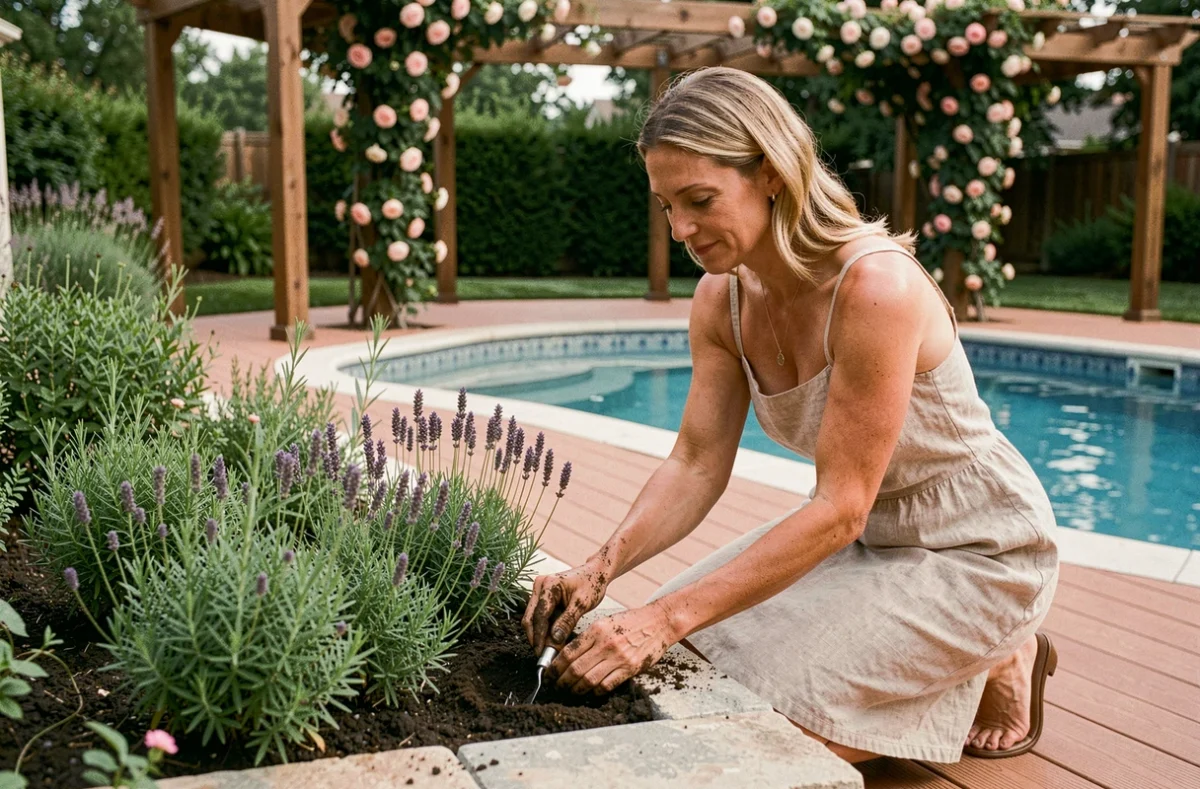
Ornamental grasses, lavenders, and agapanthus withstand saline or chlorinated splashes well. Conversely, some soft-leaved shrubs like hydrangeas suffer quickly if they are less than two meters from the edge.
The common-sense rule: leave at least one and a half meters between the coping and the first plantings. This space limits leaves in the pool and protects the roots.
4. Integrate low-voltage lighting around the pool
Lighting transforms the atmosphere of a pool area as soon as night falls. Low-voltage LED solar lights allow you to mark pathways without heavy wiring.
Two areas deserve dedicated lighting: the path between the house and the pool (safety) and the pool deck itself (user comfort). Ground-oriented lighting, rather than upward, avoids light pollution and highlights the textures of the materials.
Recessed lights in the coping create a grazing effect on the water that is enough to animate the surface without visually overcrowding the space.
5. Install a bioclimatic pergola instead of a parasol
A parasol moves, turns in the wind, and often ends up stored away. A bioclimatic pergola with adjustable slats offers adjustable shade that adapts to the sun’s path throughout the day.
Positioned between the house and the pool, it creates a shaded buffer zone where the perceived temperature drops significantly. A bioclimatic pergola also protects furniture from UV rays and extends the lifespan of outdoor cushions and textiles.
The installation cost is higher than that of a retractable awning, but the structure adds permanent functional value to the garden.
6. Create a dining area separate from the sunbathing area
Mixing the dining table and sun loungers on the same deck creates confusion of uses. Physically separating these two functions, even with a simple change of flooring or a low hedge, improves comfort for everyone.
The dining area benefits from being placed under the pergola or near the kitchen. The sun lounger area remains as close to the pool as possible, facing south. This separation also prevents wet towels from being next to plates.
7. Choose treated aluminum furniture instead of woven resin
Woven resin does not age well under intense UV and fades in two to three seasons in the sunniest regions. Treated epoxy aluminum resists splashes, does not rust, and can be cleaned with a hose.
The lightweight nature of aluminum also facilitates winter storage, a practical advantage when you need to move six chairs and a table into a garage.
8. Plan for a technical room that is accessible but discreet
The filtration system, heat pump, and treatment products require regular access. A technical room that is too far from the pool lengthens the pipes and complicates maintenance. If too visible, it disrupts the garden’s ambiance.
The most functional solution remains a buried or semi-buried box close to the deck, hidden by a vegetated screen or a composite wood panel matching the terrace.
9. Install an outdoor shower near the coping
A solar or connected shower, placed less than three meters from the pool, reduces impurities brought into the water. It limits the workload of the filter and decreases the consumption of treatment products.
- A composite wood slatted shower base prevents standing puddles on the deck
- A mixer tap allows rinsing with warm water after swimming, which genuinely encourages swimmers to use it
- A screen made of reed or perforated panels offers a minimum of privacy without blocking air circulation
10. Limit impermeable surfaces to manage runoff
Around a pool, the temptation is to concrete or pave every square meter. Impermeable surfaces concentrate runoff towards the pool and cause overflow during storms.
Alternating slabs laid on pedestals and grassed strips allows rainwater to infiltrate naturally. Grass joints between the slabs reduce radiant heat in summer and contribute to the visual integration of the pool into the garden.
This choice also has a regulatory impact: in some municipalities, the soil impermeability coefficient is capped by the local urban planning plan. Check this point before finalizing your landscaping plan.