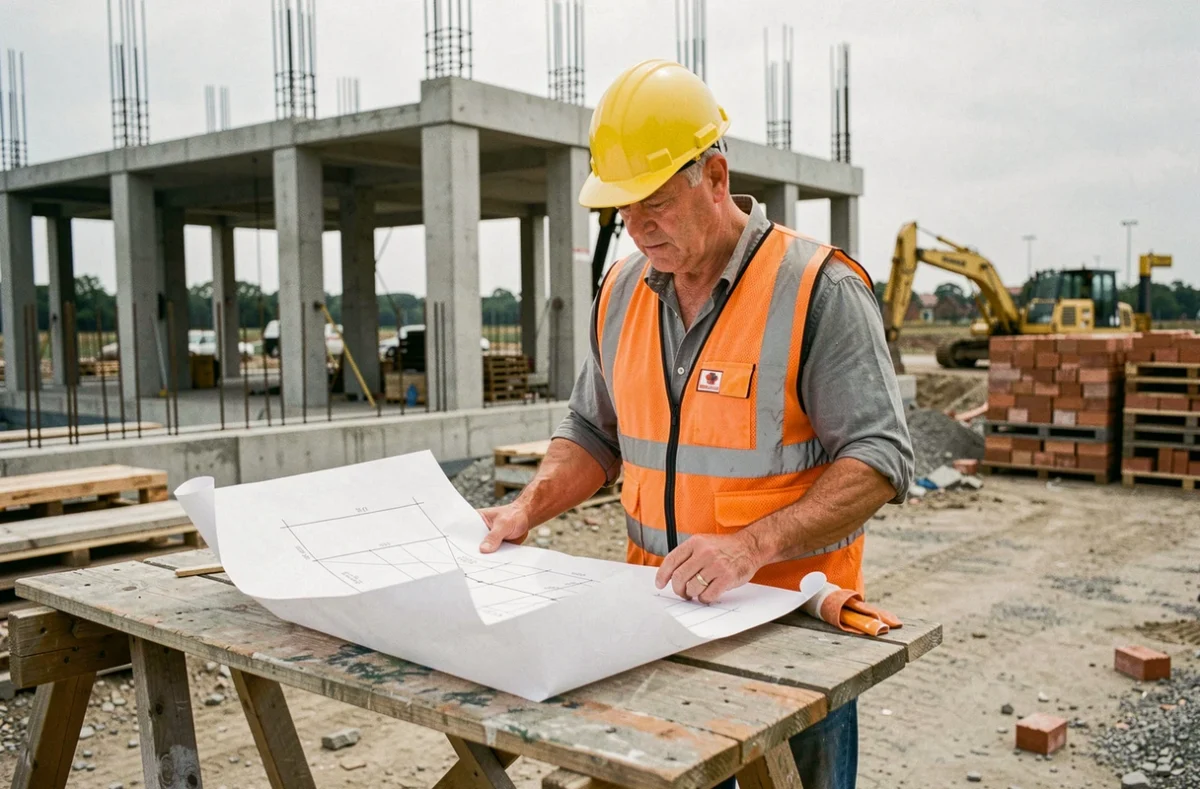
A plasterboard wall being installed doesn’t mean the electrician has run the conduits behind it. On a construction site, what you can see with the naked eye rarely tells the whole story. Tracking progress means comparing what has actually been done with what was planned, then adjusting the next steps before a delay spreads from one trade to another.
Physical progress and financial progress: two indicators to compare on site
Have you ever received a progress payment invoice for a phase of work that hasn’t even started yet? It’s a common occurrence. A paid invoice is no proof that the work is complete. Financial progress measures the amounts committed or invoiced, while physical progress measures the volume of tasks completed on site.
Tracking just one of these two indicators gives you a distorted picture of the project. A contractor may have used up half the planned budget while the structural work is only one-third complete. Comparing the two columns in a simple spreadsheet helps you spot discrepancies before they turn into disputes.
| Indicator | What it measures | Practical example |
|---|---|---|
| Physical progress | Proportion of tasks completed on site | Slab poured, partitions erected, plastering finished |
| Financial progress | Proportion of the budget spent or invoiced | Deposit paid, progress payment settled |
By regularly checking La Gazette de Constantine’s construction coverage, you can find on-site reports that clearly illustrate the gap between spending and what’s actually happening on the ground.
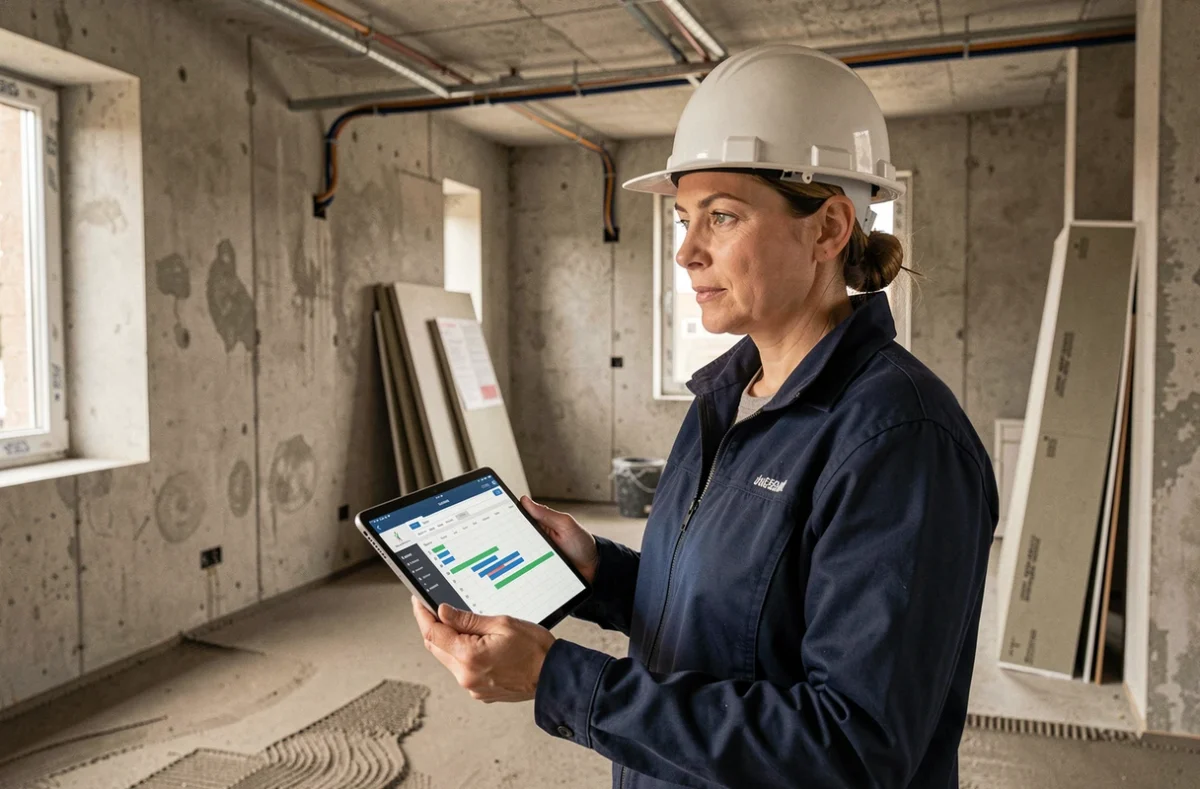
Construction schedule: create a tracking tool that actually gets updated
A schedule left untouched in a file forgotten on a desk is no use to anyone. To become a genuine planning tool, it needs to meet three conditions: it must be easy to read, shared, and updated every week.
Break down tasks by dependency, not by trade
The usual approach is to list the trades (masonry, plumbing, electrical) and assign dates to each. The problem is that some tasks depend on one another across trade boundaries. The electrician can’t run the conduits until the drywall contractor has installed the tracks, but once the partitions are closed, it’s too late.
Identifying dependencies between tasks prevents most hold-ups. Note which task must be completed before another can begin. This is known as the critical path: the longest chain of tasks, which determines the project’s total duration.
Update the schedule every week
A half-day delay in the tile delivery may seem insignificant. But if the tiler is due to come in just before the carpenter, the delay pushes back the skirting board installation, then the final coat of paint, and then the furniture delivery.
Updating the schedule every week makes it possible to adjust dates across the board. Project management software or even a shared spreadsheet will do, as long as every contractor has access and records their actual work dates.
Construction coordination and site meeting minutes: who follows up and who signs off
On larger construction projects, an OPC (scheduling, management and coordination) role may be assigned to a dedicated professional. This role is not automatically included in the construction management contract. Check the contract documents to see who is responsible for it.
In practice, the person responsible for OPC handles the following:
- Following up with contractors whose work is coming up to confirm their availability and material supplies
- Updating the master schedule after each site meeting to include any delays identified
- Coordinating the sequence of work to prevent two trades from getting in each other’s way in the same area
If no one has been assigned the OPC role, the client (the homeowner or investor) often ends up making all the calls. Clarifying from the outset who coordinates the schedule avoids any ambiguity.
Meeting minutes as a record of evidence
Every site meeting should produce written minutes. This document records observations, decisions made, and actions to be taken, with a deadline for each. If a delay leads to a dispute, it’s the only record that can help establish who was responsible.
Minutes that aren’t signed or circulated within 48 hours lose their value. Email them to all contractors and request a read receipt.
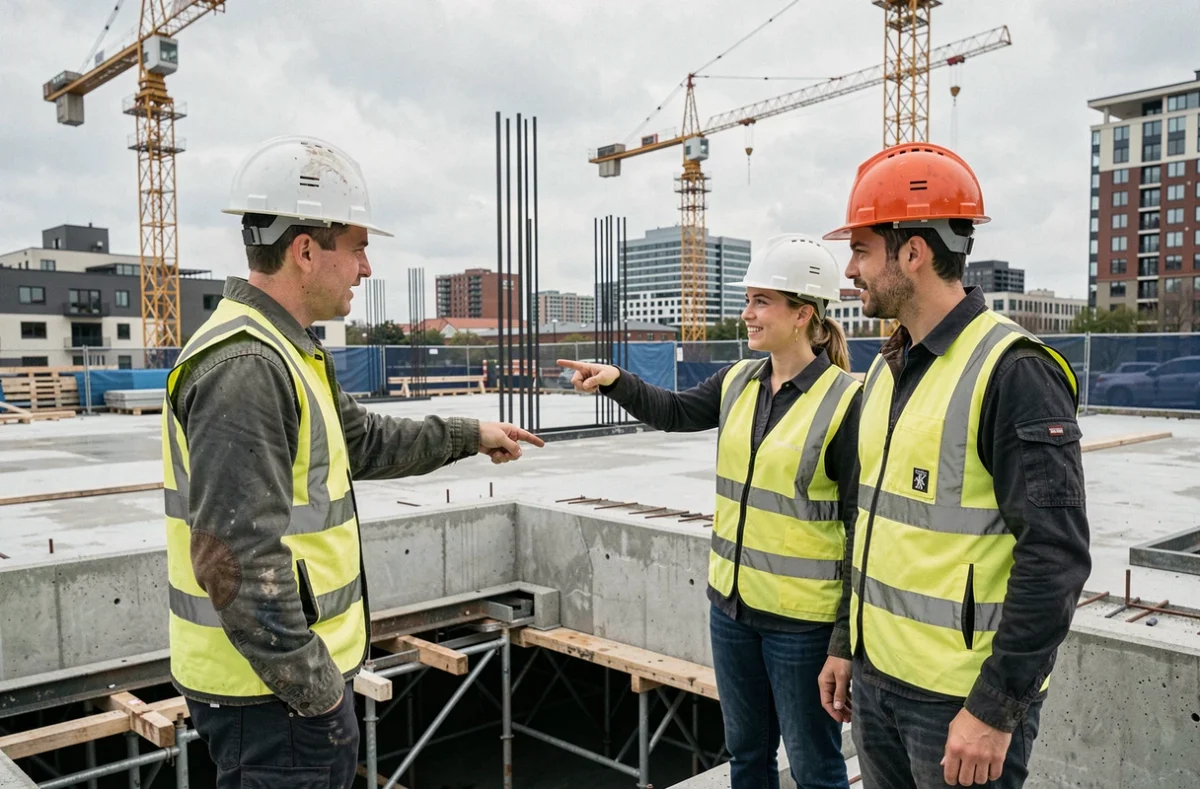
Plan ahead for the next stages of construction: three practical points to watch
Planning ahead doesn’t mean trying to predict everything. It means identifying recurring sticking points and preparing for them.
- Lead times for certain materials (custom joinery, imported tiles, specialist equipment) can stretch to several weeks. Ordering as soon as the quote is signed, rather than when installation is due, saves time over the course of the project
- Pending approvals and sign-offs can bring work to a silent standstill. A plan awaiting approval from the building inspector or client can leave an entire crew idle. Keeping a register of documents awaiting approval, with an assigned person and a deadline for each, makes these hold-ups visible
- Working in an occupied property adds a human factor. When occupants remain on site during the work, their day-to-day feedback (noise, dust, blocked access) can also serve as an informal indicator of actual progress
Planning ahead means making blockers visible before a delay becomes apparent. For most construction or renovation projects, a shared spreadsheet listing pending decisions, orders placed, and confirmed work dates is all you need.
Construction progress tracking depends less on technology than on the discipline of comparing the schedule, site conditions, and budget. A well-maintained spreadsheet, minutes signed every week, and a clearly designated person responsible for following up with contractors cover most needs. The rest comes down to discipline.