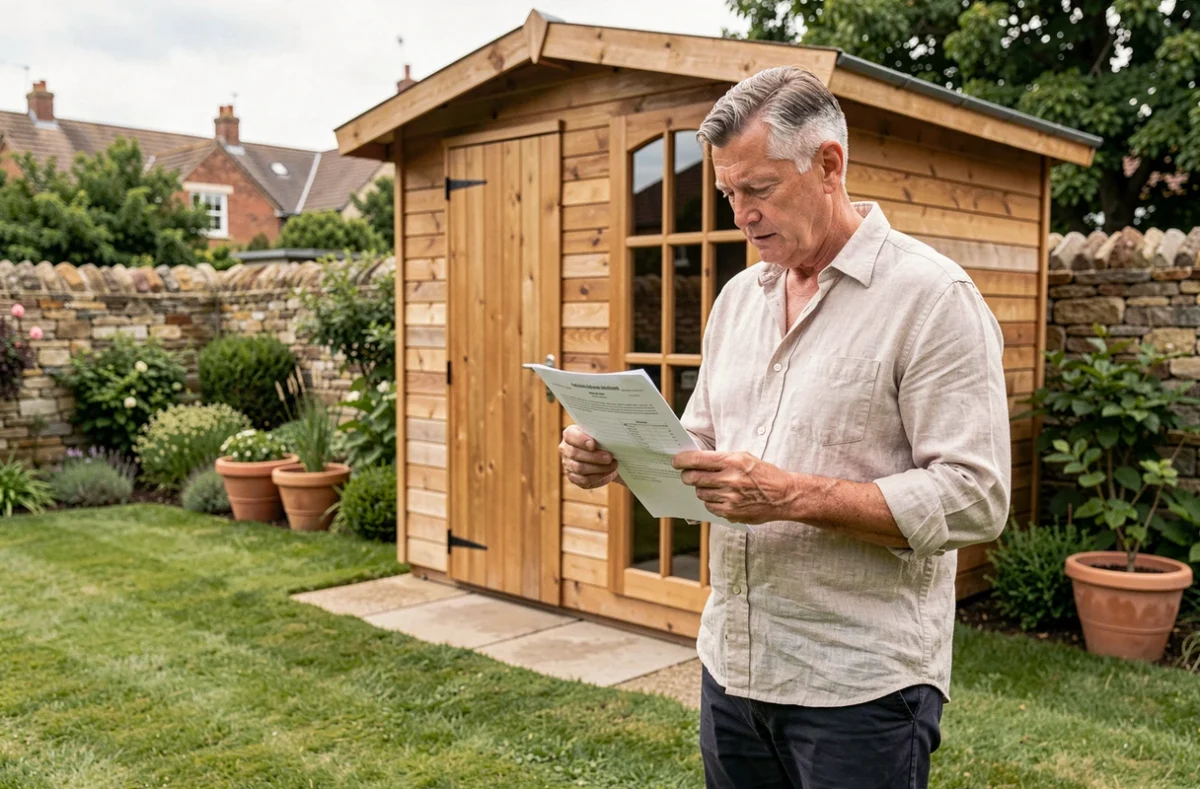
Installing a garden shed may seem trivial, but this lightweight construction can trigger two distinct administrative processes: a planning permission from the town hall and a tax declaration to the tax authorities. The surface area thresholds, the zoning of the plot, and local decisions determine what actually applies in each situation.
Planning and taxation: two administrative circuits that do not overlap
The most common confusion is thinking that a single procedure is sufficient. The prior declaration of works or the building permit, submitted to the town hall, pertains to planning law. They authorize the construction. The tax declaration, on the other hand, is used to calculate the development tax and update the cadastral rental value of the property. One does not replace the other, and the absence of one does not exempt from the other.
A property owner who obtains their prior declaration from the town hall must then report the construction in their “Manage my real estate” space on the tax website. Conversely, regularizing an existing shed for tax purposes does not equate to retroactive planning permission. This dual administrative process explains why so many owners overlook a step, sometimes unknowingly, when they need to make a declaration for a garden shed that has been in place for several months or years.
Surface area thresholds for planning permission: what the PLU can change
The national thresholds are well known: below five square meters of floor area and footprint, no planning formalities are required. Between five and twenty square meters, a prior declaration of works is sufficient. Beyond twenty square meters, a building permit becomes mandatory.
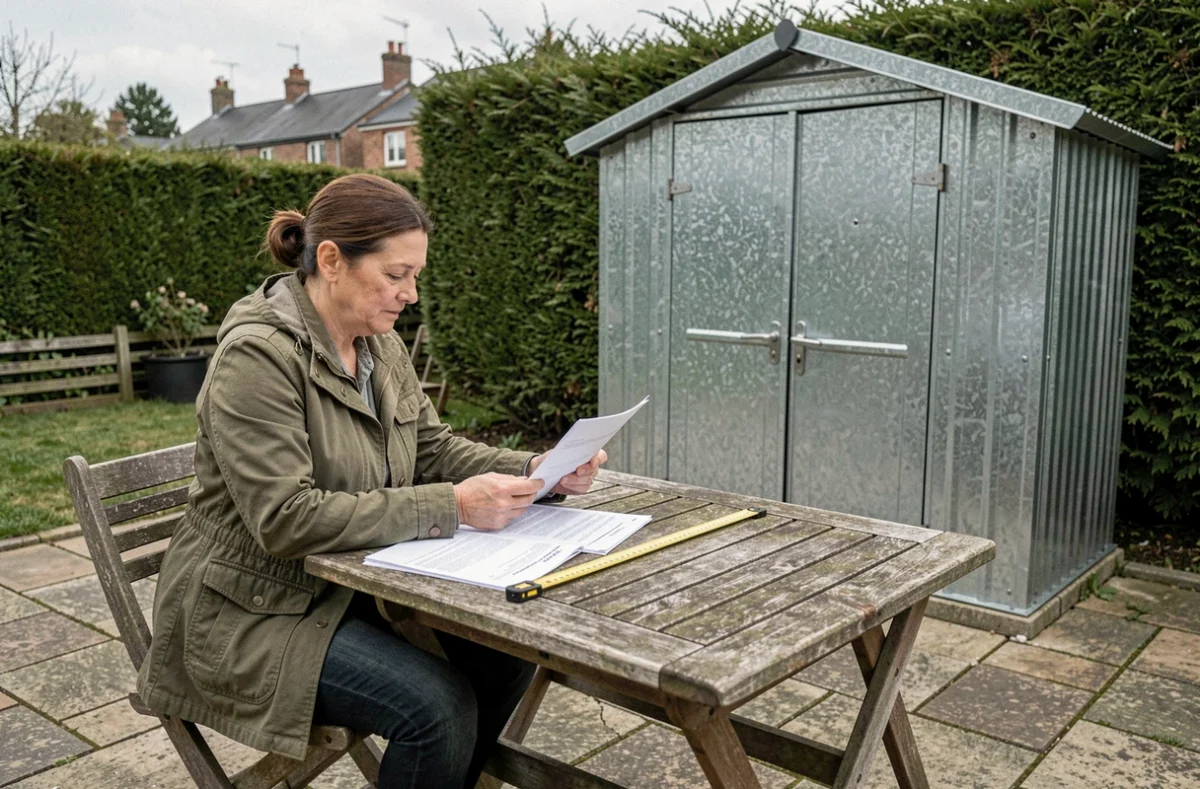
These thresholds constitute the general framework. The Local Urban Plan (PLU) or the intercommunal PLU (PLUi) of the municipality may impose additional constraints: permitted materials, minimum distance from the boundary fence, maximum height. A shed that complies with national thresholds may be refused locally if the PLU has stricter requirements.
The case of protected sectors deserves special attention. In a remarkable heritage site, near a historic monument, or within the perimeter of a national park, a shed normally exempt from formalities may require a prior declaration. Zoning takes precedence over size. Before any purchase, consulting the town hall’s planning department remains the only reliable way to know the applicable rules for a given plot.
Do removable sheds really escape procedures?
A removable shed (storage tent, canvas structure) is subject to the same surface area thresholds as fixed structures as soon as it is installed beyond the regulatory durations provided by the planning code. Before any installation, checking local rules is essential.
Development tax on a garden shed: a local calculation difficult to anticipate
The development tax applies to any enclosed and covered construction whose floor area exceeds five square meters. It is calculated based on a flat rate per square meter, revised annually, to which rates voted by the municipality, the department, and, in some cases, the region apply.
The final amount directly depends on local rates. Two identical sheds placed in neighboring municipalities can generate very different taxes. The numerical examples found online guarantee nothing for a given municipality. Only the simulation carried out based on the rates in effect in the relevant community provides a reliable result.
- The municipal share can vary by sector even within the same municipality, with some neighborhoods subject to increased rates to finance public facilities.
- The departmental share is systematically added, with a rate that differs from one department to another.
- Sheds of less than five square meters are exempt from the development tax, which explains the popularity of this format.
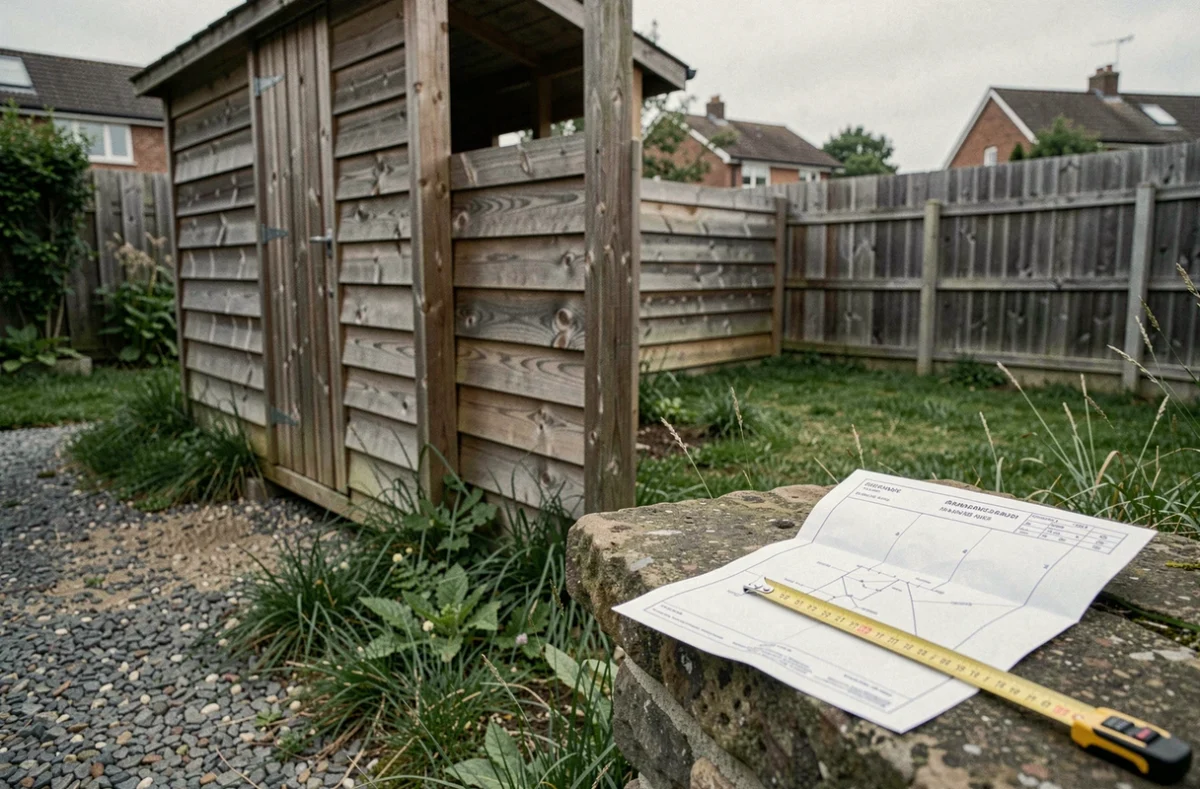
Existing undeclared shed: the concrete risks of late regularization
In recent years, the tax administration has been using aerial imagery and automated analysis tools to identify undeclared constructions. Pools were the first to be targeted, followed by verandas. Garden sheds are now among the monitored developments.
A property owner who discovers that their shed has never been declared faces two distinct regularizations:
- On the planning side: submit a prior declaration or a building permit application depending on the surface area, hoping that the construction complies with the current PLU. If it does not, the town hall may require compliance or demolition.
- On the tax side: declare the property in the “Manage my real estate” space on impots.gouv.fr, which leads to a recalculation of the cadastral rental value and potentially a catch-up of development tax.
- On the timing side: the tax administration’s right to reassess extends over several years. The catch-up is not limited to the current year.
Compliance with the PLU is the most delicate point. A shed installed ten years ago may be in violation if the planning rules have changed in the meantime. Regularizing an old shed does not guarantee its retention if the current planning document prohibits this type of construction at that location.
How to check your situation without risk
Consulting the cadastral records online allows you to verify if the declared built area corresponds to the reality of the land. In case of doubt, a visit to the town hall’s planning department provides access to the applicable PLU and any potential easements. This informal check does not trigger a tax audit.
The garden shed remains a construction in the sense of planning law and tax law, regardless of its size or appearance. The only truly determining variable is the floor area, but local zoning can modify the thresholds, requirements, and tax amounts. Checking the rules of your municipality before installing or regularizing a shed avoids complications that cost more than the tax itself.