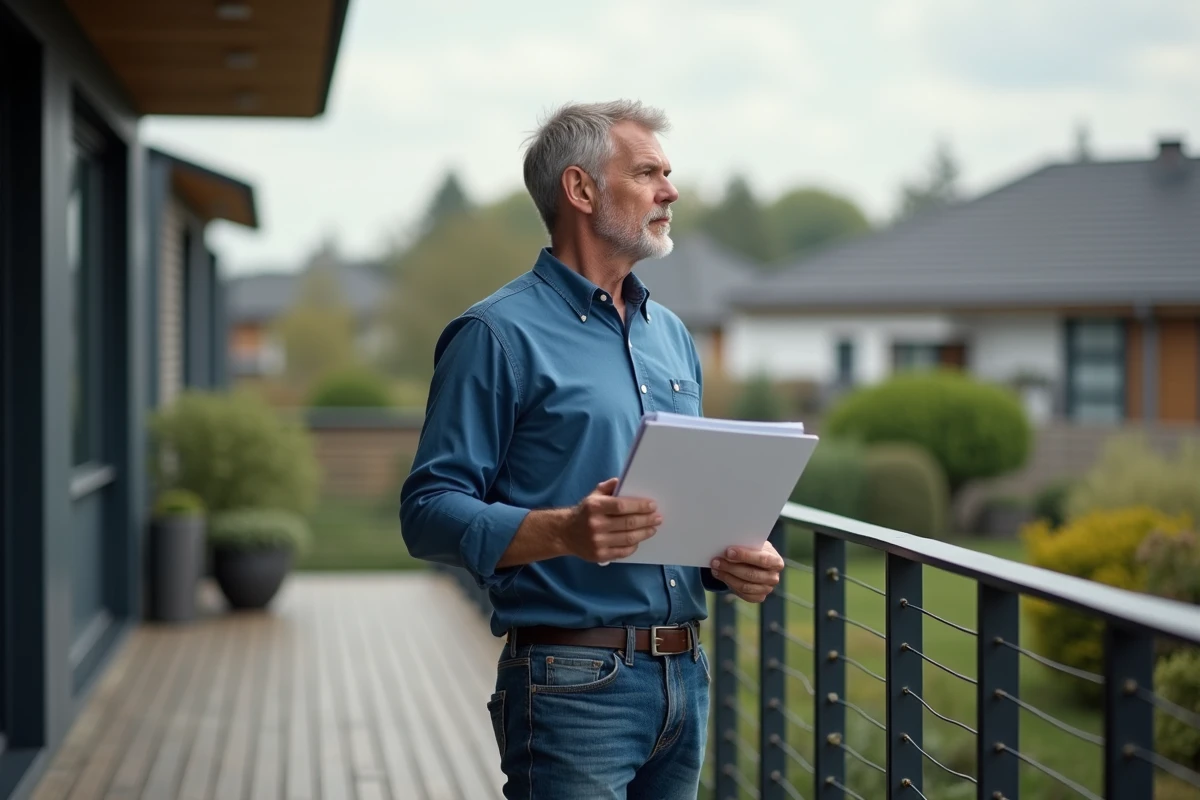
A solidly anchored terrace can increase property tax, regardless of whether it is open to the sky or lacks walls. The tax administration, attentive to every detail, dissects each development to assess its taxation.
In 2024, the declaration does not disappear: in some cases, it is mandatory, risking a penalty. The rules, often unknown, vary depending on the nature of the construction and its integration into the house. Homeowners thus navigate through sometimes bewildering texts, subject to the effects of tax reform.
Terrace, balcony, pergola: which developments influence property tax?
On paper, the question seems simple. However, as soon as we delve into the concrete details, everything becomes complicated. Property tax and some local rates evolve based on the structure, how it is fixed, and the actual use made of it. A terrace simply placed on the ground, without foundations or shelter, usually remains outside the calculation of the cadastral rental value. In contrast, a masonry terrace, elevated or covered, immediately falls into the category of surfaces that must be reported to the tax authorities. This is also true for balconies and terraces that are suspended or attached to the house: their existence can increase the property tax.
Here are the distinctions to remember to avoid declaration errors:
- A ground-level terrace often remains off the tax radar, unless its comfort and equipment bring it closer to an outdoor living room.
- Regarding the development tax, the footprint serves as a reference: from 5 m² under a roof, the declaration is mandatory.
- A solidly anchored pergola can also increase the surface taken into account.
One crucial point is: does the development add real value to the cadastral rental value? A masonry terrace, adjacent to the house, quickly resembles an extension and increases the tax. The tax authorities base their assessments on the characteristics of the work and local rates.
For those who wish to clear up uncertainties, a precise guide exists: declaring a terrace to the tax authorities. A simple oversight can be very costly, with back payments and penalties that arise as soon as the error is detected.
Tax declaration in 2024: what the regulations really impose
The law leaves little room for interpretation. The urban planning code and taxation require the declaration of any modification to the footprint or floor area, especially when the work is permanent. The boundary between outdoor development and tax extension lies in the durability and anchoring of the construction.
In practice, a masonry terrace, elevated, covered, or anchored to the ground must be subject to a prior declaration. The property declaration, via the official form, allows for adjusting the tax base. A simple paving at ground level without a roof often escapes this obligation, unless it becomes a fully usable living space.
Here are the cases where the procedures are absolutely necessary:
- Balconies or suspended terraces that extend the house are automatically included in the tax base.
- A fixed shelter, even fully open, requires a prior declaration of work with the urban planning department.
Vigilance is essential, as the Ministry of Economy and Finance severely penalizes failures: fines, back payments over several years, or even reassessment. It is better to report any changes within 90 days of the completion of the work, before the administration notices during a check or compliance verification.

What tax effects and procedures after your work?
Adding a surface to your house has immediate effects on property tax. A masonry terrace or covered extension, any enlargement increases the cadastral rental value. The tax authorities rely on this information to update the amount to be paid: the higher the declared surface, the higher the bill. Some have discovered this after creating a large terrace accessible from the living room: the bill skyrockets the following year.
As soon as the construction is finished, the procedure is expected: fill out the appropriate CERFA form, to be sent to the property tax center within three months. Forgetting this formality exposes you to penalties: at least €150 per undeclared room, plus retroactive back payments.
Homeowners should keep these points in mind after declaration:
- Sometimes, a temporary exemption from property tax applies to newly completed constructions.
- The modification taken into account only applies from the civil year following the completion, during the next property tax notice.
The tax services scrutinize each file closely. Any inconsistency, any oversight, and regularization does not take long. Even the materials used during the work can affect the bill, according to the scales of the property tax center. Anticipation avoids sleepless nights and costly corrections later.
Every terrace marked on a plan is a signal for the tax authorities. In 2024, it is better to master the rules before seeking to enjoy the beautiful days on a brand new development… lest you receive a financially painful surprise.