
You have just spotted a shipping container or a garden shed that fits your project. Before placing an order, a verification is necessary: does your land actually allow for this installation? The administrative procedures for placing a container or a garden shed depend on the ground area, the zoning regulations, and sometimes invisible constraints on the cadastral map. Ignoring these steps exposes you to a demolition order.
Check your land before buying a container or a garden shed
Most guides start with the prior declaration or building permit. The problem is that these procedures come too late if the land itself blocks the project. Several situations can make the installation impossible, and they are often discovered after the purchase.
The Local Urban Planning Plan (PLU) of your municipality sets the construction rules zone by zone. Some areas prohibit any ancillary construction at the property line, impose specific cladding, or limit the height to the ridge. Consult the PLU at the town hall before any order, not after.
Have you heard of protected areas? If your plot is located within the perimeter of a historical monument, a classified site, or a Natura 2000 zone, the constraints are heavier. The Architect of the Buildings of France must then give an opinion, and this can refuse a visible container for aesthetic reasons.
Other blockages are less known:
- A right of way or pipeline on the area where you plan the installation, which can be consulted at the urban planning department or on the operational urban planning certificate.
- A natural risk (flooding, shrink-swell of clays, landslide) that prohibits or conditions constructions in the Risk Prevention Plan.
- Insufficient access for the crane truck delivering the container: narrow alley, limited tonnage bridge, low overhead cables. If the transporter cannot access, the project falls through.
To summarize all these administrative procedures on Jardino, each constraint is detailed with the corresponding forms.
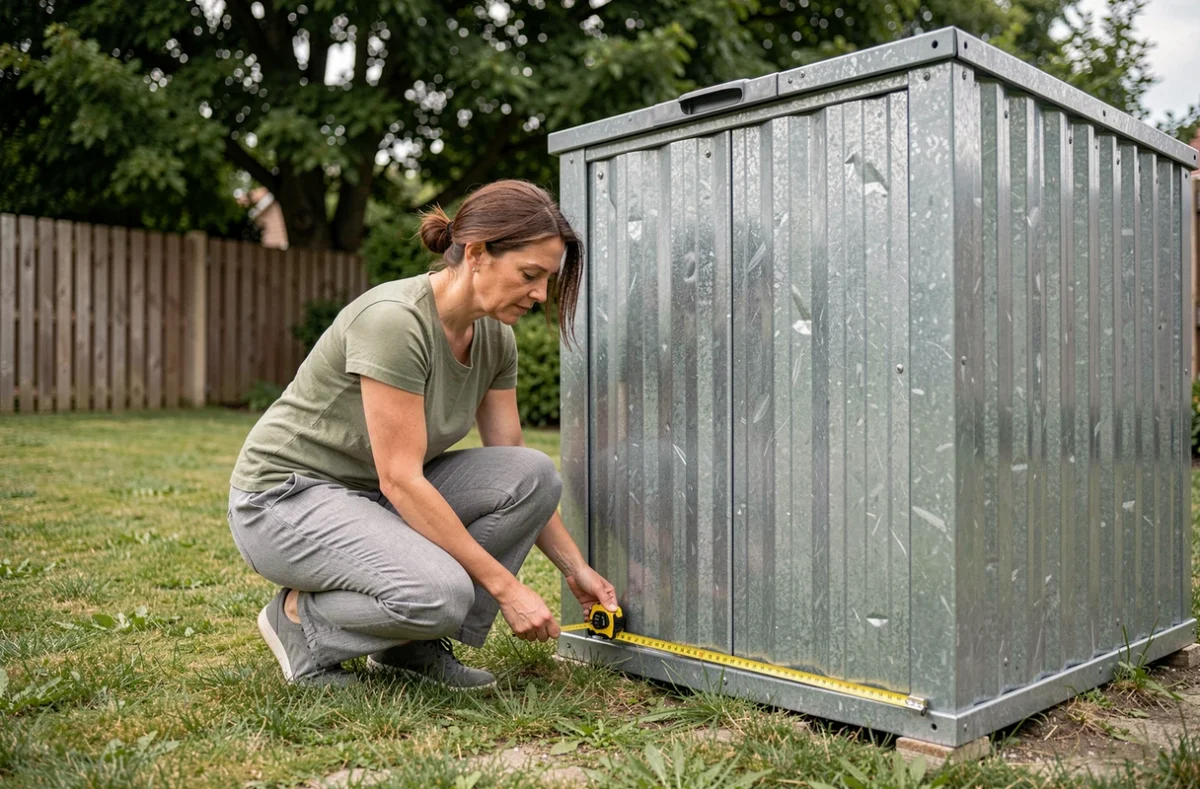
Prior declaration or building permit depending on the ground area
Once the land is validated, the nature of the authorization depends on the floor area or the ground footprint of your installation. The urban planning code distinguishes three main cases.
Area less than five square meters
A small garden shed or a container of six or eight feet falls into this category. No authorization is required in unprotected areas. In protected areas, a prior declaration of works remains mandatory.
Area between five and twenty square meters
This is the most common case for a twenty-foot container used as a storage space or garden studio. You must submit a prior declaration of works at the town hall (corresponding Cerfa form). The processing time is generally one month, sometimes two in protected areas.
Area greater than twenty square meters
A forty-foot container or an assembly of several modules exceeds this threshold. A building permit becomes mandatory. The processing time then goes to a minimum of two months. If the total area of all constructions on the land exceeds a certain threshold, hiring an architect may be required.
Prepare the ground and comply with construction rules
The administrative authorization does not exempt you from properly preparing the land. A container placed directly on soft ground will sink, deform, and lose its waterproofing in a few seasons.
Why is this point so often overlooked? Because a shipping container seems robust. It is, but only when it rests on a flat, stable, and drained surface. Depending on the nature of the ground, several options exist: concrete footings, poured slab, beams, or compacted gravel bed.
Leveling and drainage condition the durability of the installation. On sloped land, earthworks will add to the budget. If the PLU imposes minimum distances from property boundaries, ensure that the leveled area respects these setbacks.
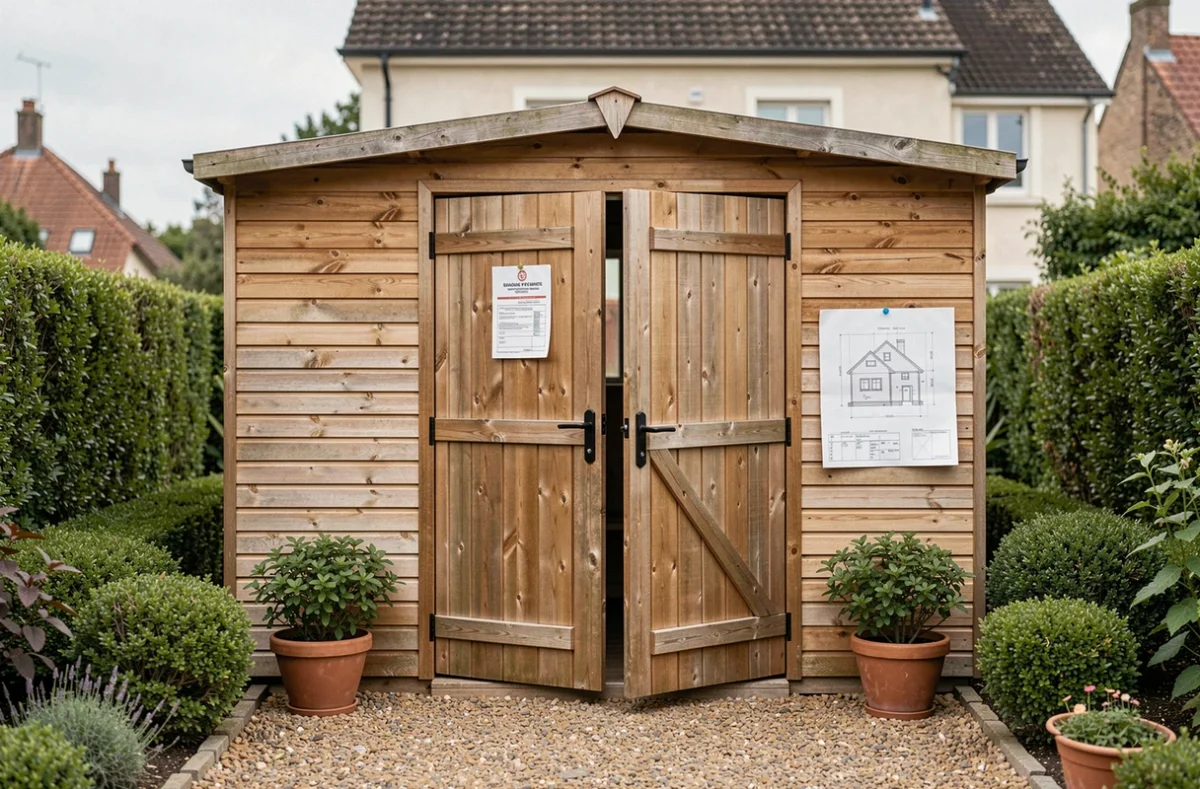
Habitable container or storage shed: obligations differ
Transforming a container into an office, studio, or guest room radically changes the regulatory framework. A garden shed intended for storing tools does not fall under the same requirements as a living space.
To make a container habitable, you must comply with current thermal regulations, provide adequate insulation, install sufficient openings for ventilation and natural light, and connect the module to networks (water, electricity, sanitation). These works often require the submission of a building permit, even if the area remains below the twenty-square-meter threshold, as long as there is a change of use.
A container declared as a storage shed but used as a residence exposes you to penalties. The urban planning service can detect the violation during a compliance check and require restoration.
Development tax and obligations after installation
Any new construction subject to prior declaration or building permit generates a development tax. Its amount varies according to the municipality and the taxable area. The bill sometimes arrives several months after obtaining the authorization.
After installation, remember to declare the new area to the land tax center. A garden shed or container increases the cadastral rental value of the property, which can modify the property tax.
Last point often forgotten: if you obtained a building permit, you must display the regulatory sign on the land for the entire duration of the work and submit a declaration certifying the completion and compliance of the works (DAACT) once the installation is finished. Without this last step, the authorization remains legally suspended.