Retirement is not just about freeing up time. It redistributes social markers, cognitive routines, and physical demands that work provided without us thinking about it. Finding new activities and hobbies in retirement thus involves rebuilding these three pillars, taking into account constraints that traditional idea lists often overlook: the actual budget, local offerings, and sustainable regularity.
Funding Leisure Activities in Retirement: A Maze of Dispersed Aid
No single national scheme funds leisure activities for retirees. Aid comes from multiple sources: basic pension funds, complementary ones like Agirc-Arrco or MSA, health mutuals, local authorities, and sometimes sport-health programs prescribed by a doctor. The actually accessible offerings vary greatly from one area to another.
A municipality may subsidize membership in a sports club while a neighboring one offers nothing. A retiree from the agricultural system benefits from MSA services that have no equivalent for a former private sector executive. This dispersion requires a personalized inventory before making a financial commitment, by contacting their pension fund, local government, and mutual insurance.
To identify structures and resources suitable for seniors, platforms like seniors-univers.fr help centralize information and compare available options based on one’s situation.
Physical Activities Adapted for Seniors: Choosing According to Actual Condition
The common reflex is to sign up for a gym or a group class in the first months of retirement. However, the dropout rate is significant when the chosen activity does not match one’s current physical condition. Starting with an assessment by a doctor or a trained sports educator for the senior public helps avoid injuries and early discouragement.
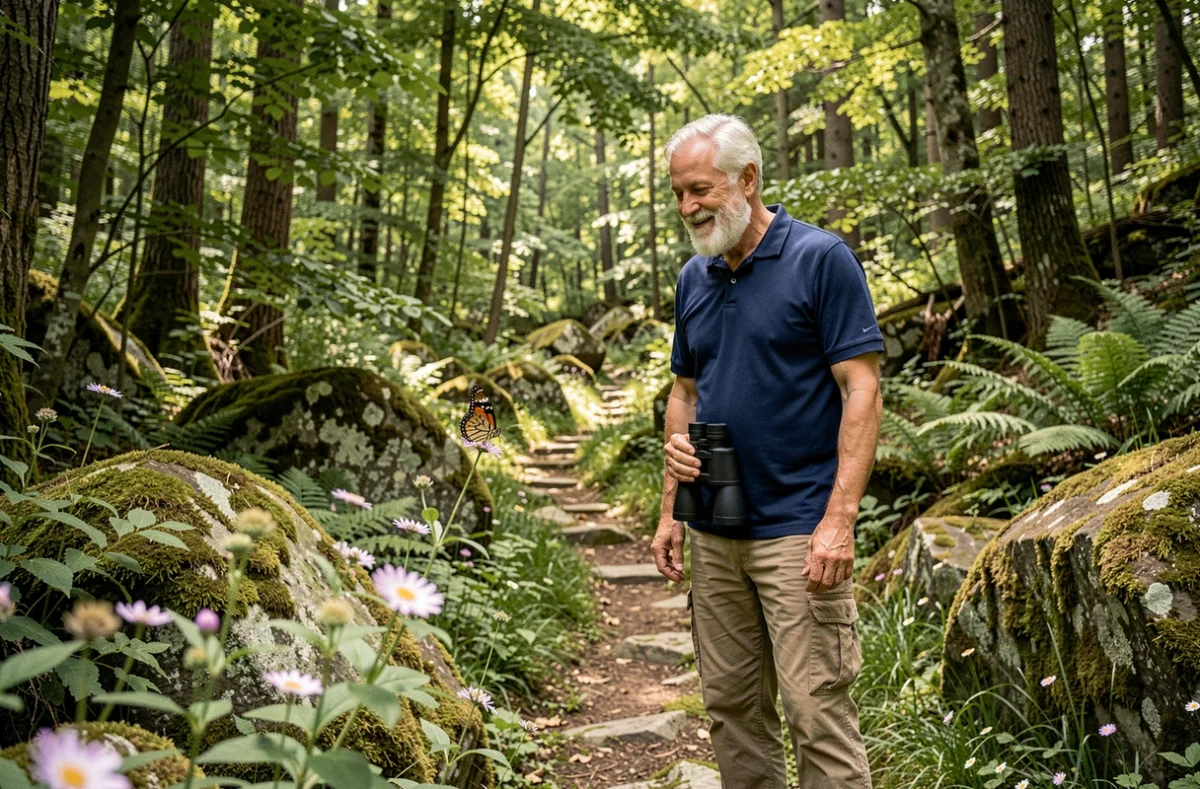
Health-sport programs, sometimes partially covered by Health Insurance with a medical prescription, provide a structured entry point. Nordic walking, aquagym, gentle gymnastics, or tai chi are among the most recommended disciplines.
- Nordic walking engages both the upper and lower body simultaneously, with low joint impact, and can be practiced outdoors year-round.
- Aquagym reduces strain on the joints thanks to the buoyancy of water, making it accessible even in cases of moderate osteoarthritis.
- Tai chi improves balance and coordination, two factors directly linked to fall prevention.
The issue is not intensity but regularity. Two to three weekly sessions, even if short, yield more benefits than a single intense effort.
Cognitive Stimulation in Retirement: Beyond Crossword Puzzles
Intellectual leisure activities are not limited to reading or word games. Writing workshops, language courses, and lifelong learning universities offer structured formats that maintain cognitive effort over time. Active learning, with production and interaction, stimulates memory more than passive reception.
Online courses have broadened access to these activities. A retiree living in a rural area can take an art history workshop or an Italian course without relying on local offerings. The downside: isolation in front of a screen does not replace the social connection of an in-person class.
Local heritage visits are a particularly suitable cultural option for retirees, often free and close to home. European Heritage Days, for example, offer free access to sites usually closed to the public each year.
Retiree Volunteering: Realistic Engagement Rather Than Idealized
Volunteering is often presented as the royal road to finding meaning in retirement. The reality is more nuanced. Regular associative engagement among seniors is not uniformly increasing. It depends on health, mobility, family obligations (caring for grandchildren, helping a dependent relative), and distance from associative structures.
Before committing, it is useful to distinguish three levels of involvement:
- Occasional volunteering (events, collections, occasional shifts) requires little regularity and suits fluctuating schedules.
- Regular volunteering (school support, outreach, welcoming in associations) involves a fixed time slot each week and initial training.
- Skills-based volunteering (legal advice, accounting, professional mentoring) mobilizes the skills acquired during active life and brings a particularly strong sense of usefulness.
Testing an occasional format for a few months allows one to verify that the activity remains compatible with other commitments before investing more.
Creative Hobbies and Manual Workshops: What Regular Practice Brings
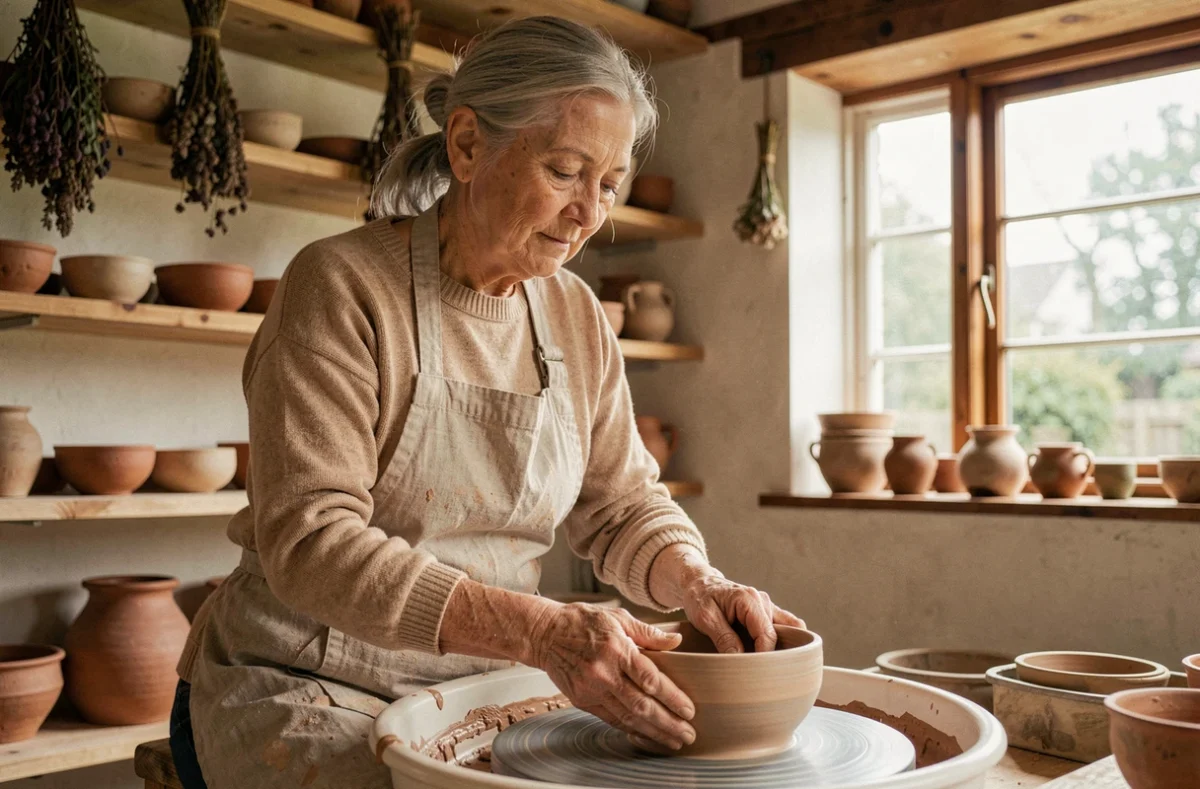
Painting, pottery, woodworking, sewing, photography: creative workshops combine cognitive engagement, fine motor skills, and tangible production. This last point matters. Producing an object, an image, or a text generates a satisfaction different from that of a purely receptive activity.
Municipal clubs and neighborhood associations remain the most common access point. Prices vary by municipality, and some pension funds reimburse part of the annual fee upon presentation of a receipt.
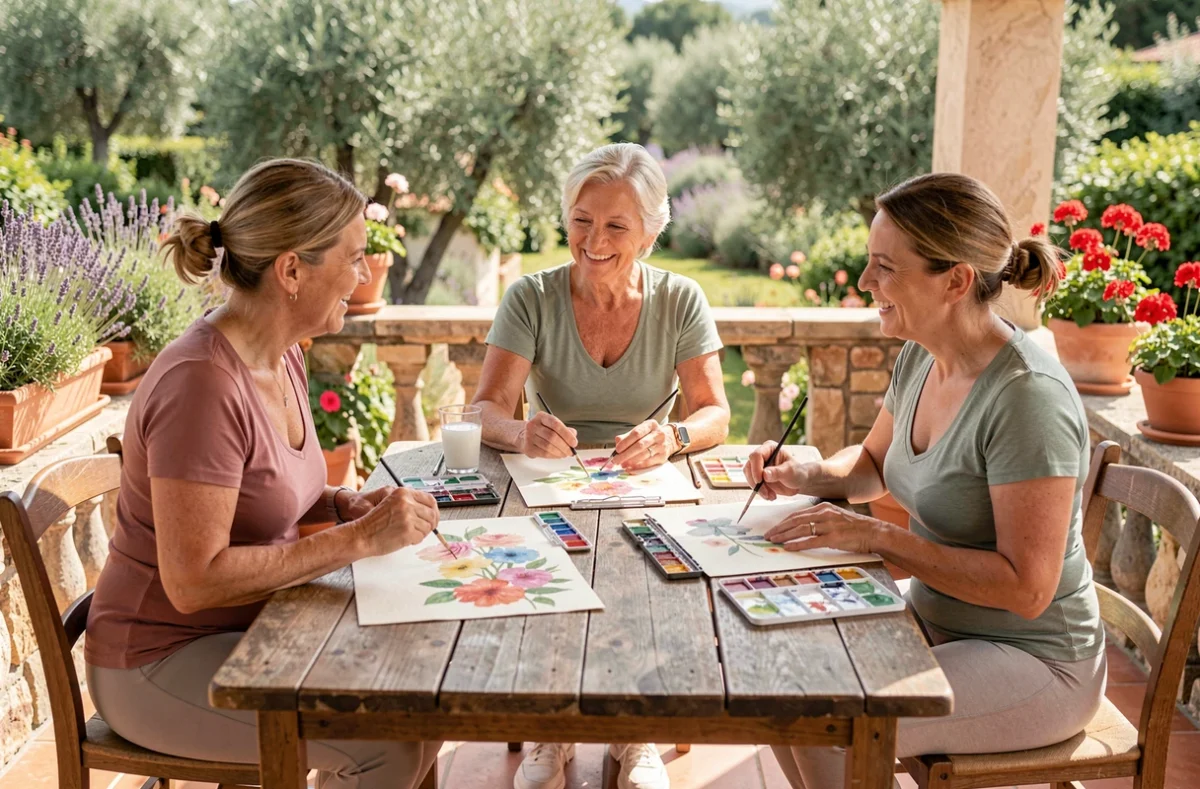
The social dimension of these workshops is at least as valuable as the activity itself. Participating weekly in a drawing or watercolor class creates a routine of regular meetings, which partially compensates for the loss of the professional social framework.
Choosing a leisure activity in retirement should be treated as a real project: identifying financial constraints, checking local offerings, and testing before committing for the year. Retirees who diversify their activities between physical effort, intellectual stimulation, and social connection make the most of this period, provided they remain clear about what their health and budget realistically allow.