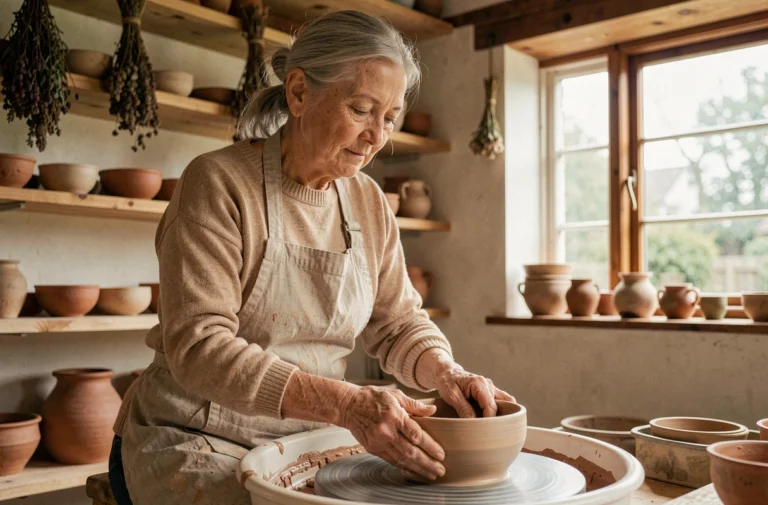
A warm interior does not rely on the accumulation of cushions and candles. The feeling of warmth depends on three measurable levers: the color palette, the proportion of natural materials in the room, and the ratio of free surfaces to occupied surfaces. Understanding these mechanisms allows for the transformation of a living space without falling into the generic decoration found everywhere.
Color Palette and Thermal Perception of an Interior
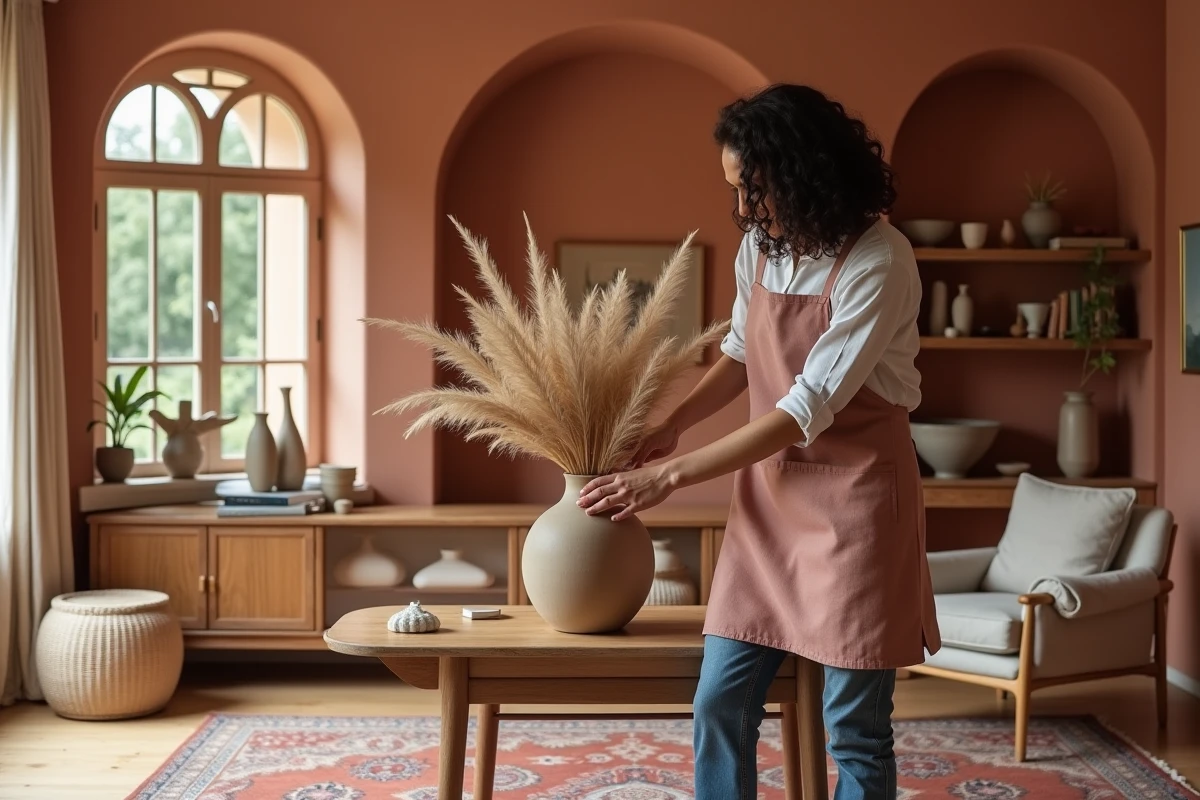
Color alters the temperature perception of a room. Warm shades (ochre, terracotta, deep beige) absorb light and convey a feeling of enveloping warmth. Off-whites and light grays, on the other hand, increase brightness but can cool the atmosphere if nothing counterbalances them.
The principle to remember: a neutral base tempered by two warm accents is enough to transform the perception of a living room or bedroom. Specifically, a wall painted in linen combined with rust-colored textiles and honey wood creates a visual balance without overwhelming the space.
A common mistake is to multiply colors out of fear of monotony. Three coordinated shades throughout a room create a more cohesive effect than six scattered colors. Decorators who document their projects on perspectivemaison.com often apply this rule of three tones, adapted room by room.
Natural Materials in Decoration: Wood, Linen, and Stone
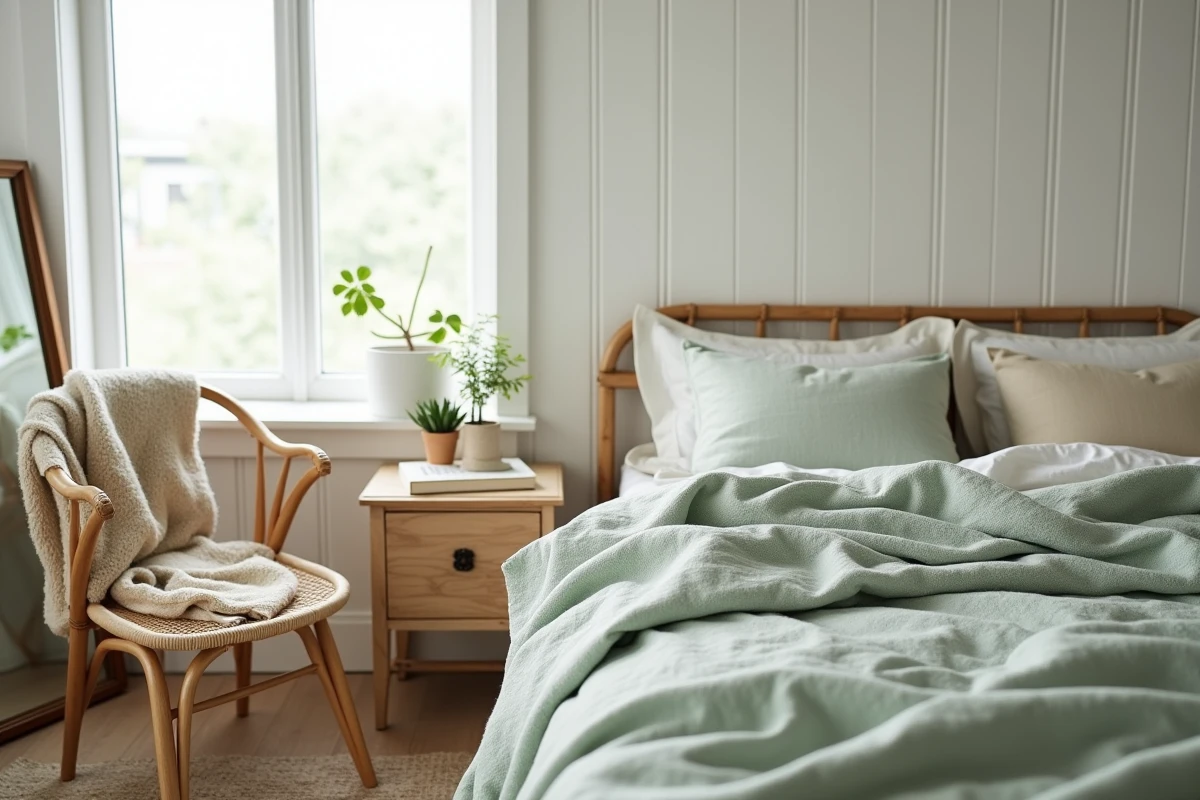
Wood remains the material that generates the strongest feeling of warmth in an interior space. Light oak, walnut, raw pine: each type alters the atmosphere. A solid oak table top does not produce the same effect as a wood-look laminate, because the texture to the touch and the variations in grain contribute to the overall perception.
Linen and stone complement wood without competing with it. A washed linen curtain softens incoming light. A natural stone countertop anchors the room. The combination of these three materials works in every room of the house, from the living room to the bedroom.
Choosing Between Raw and Treated Wood
Raw wood ages. It develops a patina, it marks, it lives. For a dining table used daily, a hard oil treatment protects without masking the grain. Thick varnishes give a plasticized appearance that undermines the material’s appeal.
For decorative elements (shelves, frames, objects), raw wood adds more character. The key is to reserve protective finishes for surfaces subject to wear and to let the rest breathe.
Second-Hand and Unique Decoration: An Underestimated Lever
The Leboncoin x Kantar barometer for 2024 indicates that the intention to buy second-hand furniture exceeds that of buying new for certain categories such as small furniture, storage, and decorative objects. This underlying trend is changing the way interiors are conceived.
A vintage piece has no equivalent in stores. A 1960s dresser, an oxidized brass mirror, a repurposed workshop lamp: these items create focal points that standard new decoration cannot replicate. The uniqueness of a space often hinges on two or three objects with a visible history.
- Local flea markets and garage sales offer solid wood furniture at prices well below new, often in species that are no longer commercially available.
- Online platforms (Leboncoin, Selency, Facebook Marketplace) allow filtering by style, era, and material, speeding up the search for a specific piece.
- Reusing avoids the production of additional furniture, an argument that goes beyond mere aesthetic considerations to touch on the sustainability of the decoration project.
Decluttering and the Feeling of a Warm Space
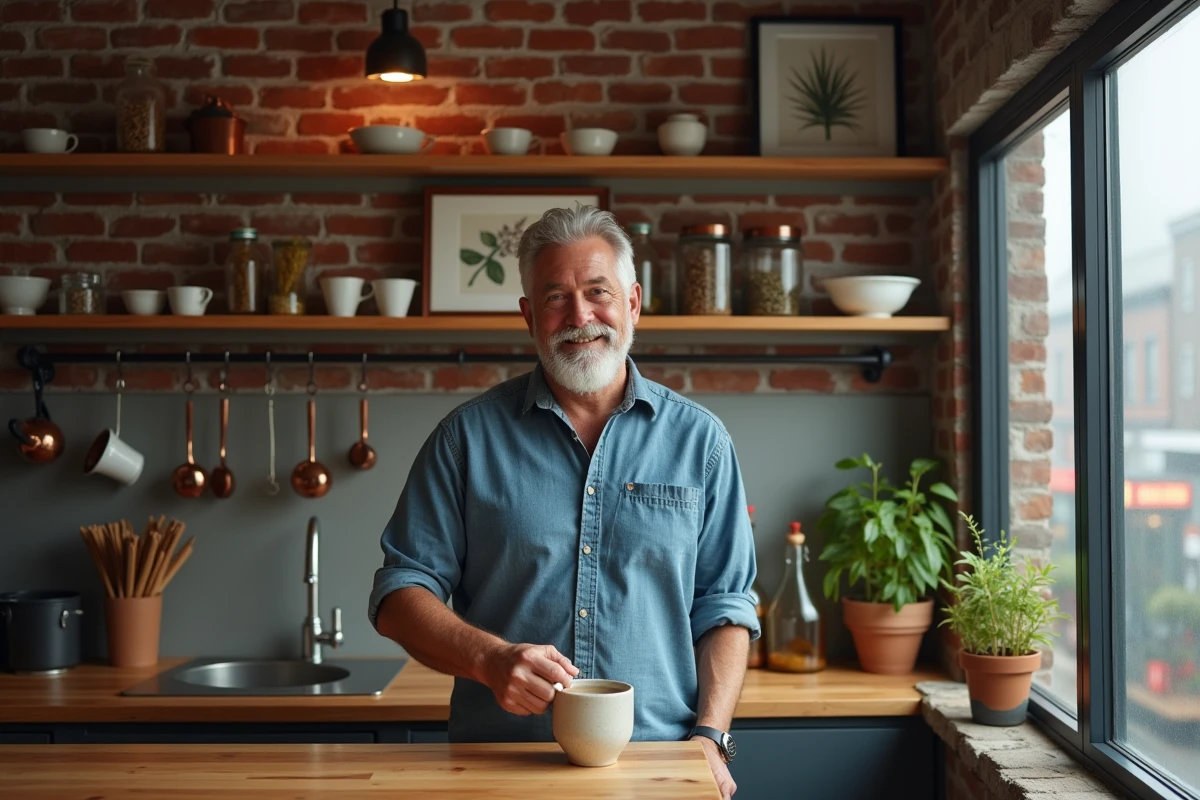
The association between warmth and the accumulation of objects is a common reflex, but studies in environmental psychology document the opposite. A decluttered space reduces cognitive load and increases the feeling of well-being, which directly contributes to the sensation of comfort.
Decluttering does not mean radical minimalism. It involves removing objects that have neither function nor emotional value, to allow the important ones to breathe. A living room with a thick fabric sofa, a wooden coffee table, and two carefully chosen objects on a shelf will appear more inviting than a room saturated with knick-knacks.
A Concrete Method for Decluttering a Living Space
Start with horizontal surfaces: tables, shelves, windowsills. Remove everything, then replace only the objects that meet a clear criterion (daily utility or real attachment). The rest goes to donation, sale, or storage.
Repeating the process room by room over several weeks avoids decision fatigue. An interior transforms more through subtraction than addition.
Lighting and Ambiance: Adapting Light to Each Area
A single ceiling light produces flat light that flattens volumes. The warmth of an interior comes from multiplying light sources at different heights: table lamps, reading lights, wall sconces, discreet garlands.
The color temperature of the bulb matters as much as the fixture. For a living room or bedroom, bulbs around 2,700 kelvins emit a golden light. Above 4,000 kelvins, the light turns cold white, more suitable for a workspace than a relaxation area.
- Install at least three light points per living space, at different heights (floor, table, wall).
- Favor lampshades made of natural materials (rattan, linen, paper) that filter and warm the light.
- Use dimmers to adjust the ambiance according to the time of day.
The decoration of a warm interior relies on technical choices more than on fleeting trends. Coordinated colors, raw materials, vintage objects, and well-positioned light form a foundation that works independently of fashions. The last useful gesture often remains the most counterintuitive: removing an object rather than adding one.