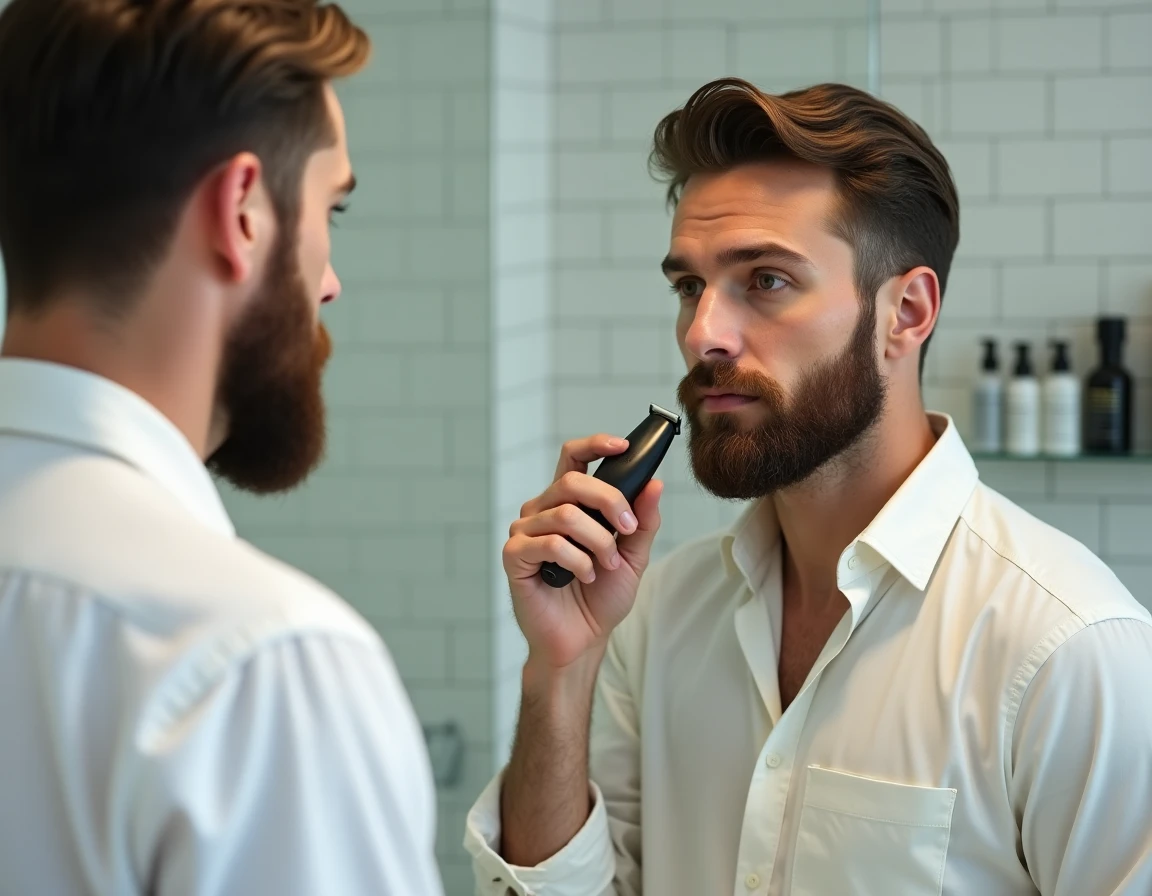
Choosing a beard length involves balancing several parameters that may not seem aesthetic at first glance: skin tolerance, professional constraints, maintenance frequency, and hair density. The perfect beard length is not just a matter of taste; it depends on measurable data that most guides overlook.
Beard Length and Skin Tolerance: The Underestimated Criterion
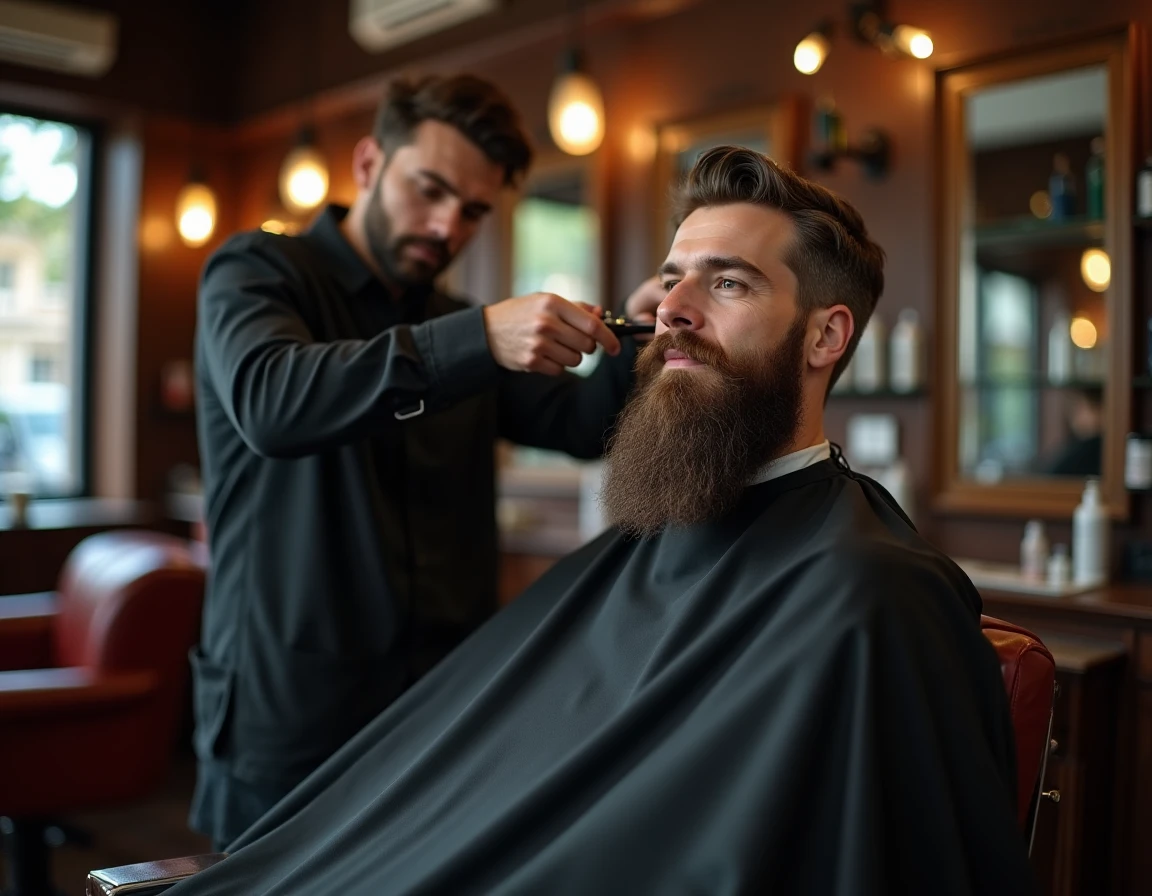
Dermatological consultations for itching, folliculitis, and irritations related to medium or long beards have significantly increased since the boom in remote work post-2020. Review articles published in the Journal of Cosmetic Dermatology between 2022 and 2023 confirm that skin tolerance determines the maximum sustainable length.
Skin prone to eczema, psoriasis, or acne does not tolerate dense beards well, as they trap sebum and impurities against the epidermis. For these profiles, maintaining a short length (like a three-day beard) significantly reduces the risk of inflammation.
Before aiming for a long beard, a simple test can help assess personal tolerance: let it grow without trimming for two weeks while observing the appearance of redness, pimples, or dry patches. If these signs appear, it’s better to stick to tips for a well-groomed beard at short to medium lengths, which limit prolonged contact between hair and skin.
Comparison Table of Beard Lengths by Style and Maintenance

Beard lengths are grouped into four main categories. The table below compares the length range, necessary maintenance frequency, and associated constraints.
| Style | Indicative Length | Trimming Frequency | Main Constraint |
|---|---|---|---|
| Three-Day Beard | About 3 mm | Every 2 to 3 days | Regularity to avoid the “unshaven” look |
| Ten-Day Beard | About 10 mm | Once a week | Frequent contour reshaping |
| Medium Beard | 15 to 25 mm | Every 10 to 14 days | Risk of itching and uneven volume |
| Long Beard | Over 25 mm | Every 2 to 3 weeks | Daily care (oil, brushing) and skin tolerance |
The ten-day beard represents the most requested compromise in barbershops since 2022, according to feedback from professionals who observe a growing demand for these “smart intermediate” lengths (between five and fifteen days of growth). This niche allows for structuring the face without imposing the daily maintenance of a long beard.
Face Shape and Beard Length: Successful Combinations
The shape of the face guides the choice much more than current trends. A round face gains definition with a slightly longer beard on the chin and shorter on the cheeks, visually elongating the oval. Conversely, an elongated face benefits from a fuller beard on the sides and a shorter one under the chin to rebalance proportions.
Three concrete guidelines help make a decision:
- Square Face: A uniform ten-day beard softens the jawline angles without weighing down the lower face.
- Oval Face: Most lengths work, but a beard that is too long risks further stretching the oval. Staying under 20 mm maintains harmony.
- Round Face: Favor volume on the chin (goatee or pointed beard) and shorten on the sides to create a natural elongation effect.
Adjusting the trimmer to different lengths (shorter guard on the cheeks, longer under the chin) remains the most accessible method for achieving the desired look without going to a barber.
Professional Constraints and Maximum Allowed Length
The ideal beard style sometimes clashes with non-negotiable rules. OSHA (Occupational Safety and Health Administration) and INRS in France updated their recommendations after 2020: respiratory PPE loses its seal beyond a very short beard.
The affected sectors are numerous:
- Aerospace and chemical industry: wearing respiratory protection devices incompatible with a beard exceeding a few millimeters.
- Health: FFP2 masks are ineffective if hair prevents a tight seal with the skin of the face.
- Security and defense: some units require complete shaving or a mustache limited to the upper lip edge.
For professionals in these sectors, the maximum beard length is not an aesthetic choice. The limit is practically a mustache or a maximum three-day beard, beyond which the effectiveness of respiratory protection is no longer guaranteed.
Hair Density and Length Choice: Adapt Rather Than Force
Not all men have the same hair density per square centimeter. Forcing a long beard length when coverage is sparse results in an uneven appearance that accentuates bare spots instead of concealing them.
A short and uniform beard better disguises density differences than a long beard. The principle lies in optics: at three millimeters, the gap between a dense area and a sparse area remains discreet. At twenty millimeters, the gaps become visible.
A beard comb allows for checking uniformity: running the comb with the hair reveals immediately the areas where coverage is lacking. If these areas represent more than a third of the surface, sticking to a short length gives a neater appearance than trying to compensate with volume.
Choosing a beard length thus relies on a combination of measurable parameters: skin reaction, face shape, job constraints, and actual hair density. The most flattering length is the one that respects these four data points, not the one displayed on a magazine model.