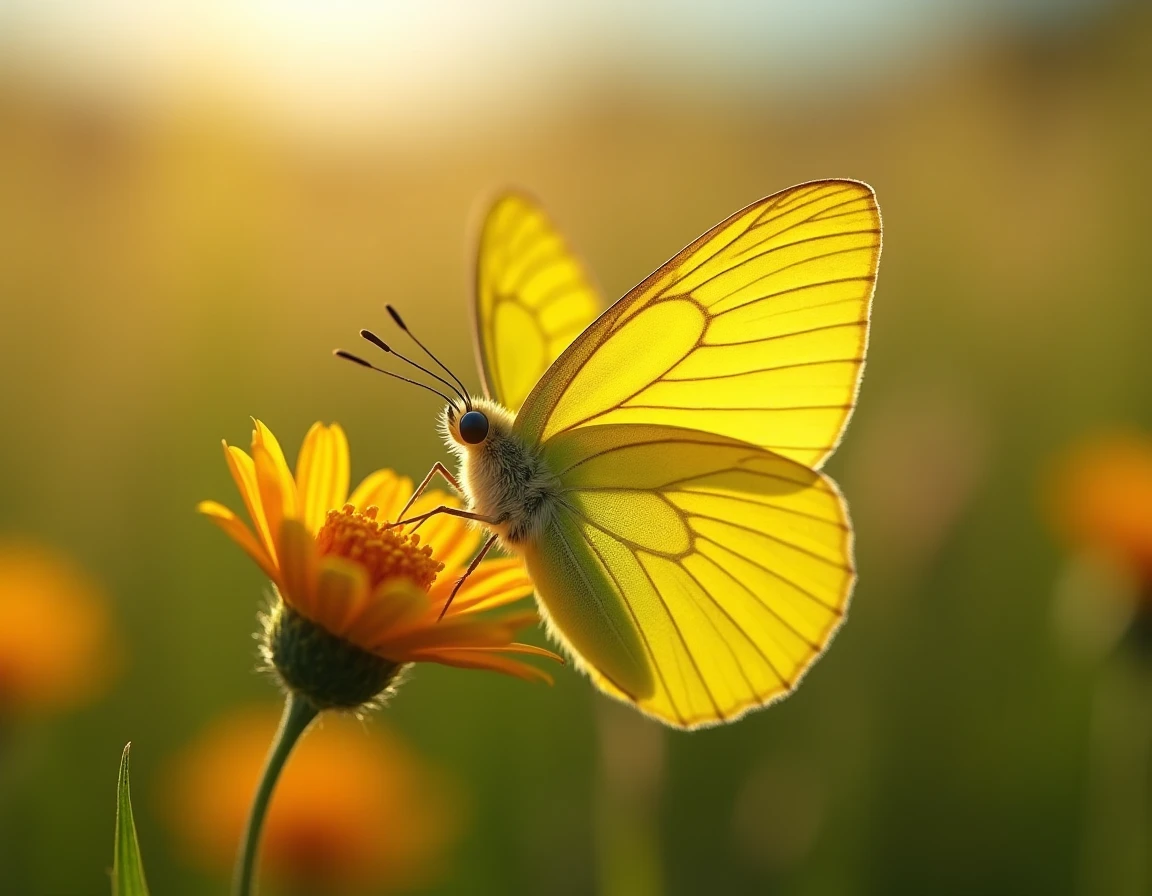
We encounter a yellow butterfly in a garden, on a hiking trail, or resting on a lavender flower, and the reaction is almost always the same: a moment of pause, a smile. This reflex is far from trivial. The yellow butterfly carries a symbolic weight that most cultures shaped long before our modern interpretations, and this symbolism varies depending on whether one is in Central America, East Asia, or Europe.
Why the color yellow changes everything for the butterfly

We tend to speak of the butterfly as a unique symbol, while its color profoundly alters the meaning attributed to it. A black butterfly evokes mourning in some regions of Latin America. A white butterfly refers to purity or the soul of a deceased person in Japan. Yellow, on the other hand, stands out for its recurring association with joy, solar energy, and renewal.
This association does not come from nowhere. The yellow of the butterfly has a biological function: depending on the species, yellow pigmentation serves for camouflage among flowers, warning predators, or attracting a mate. We project positive emotions onto this insect, but its appearance responds to very concrete survival constraints.
It is precisely this gap between natural function and human interpretation that makes the subject interesting. To delve deeper into the meaning of the yellow butterfly in cultures, one must accept to separate what pertains to documented tradition from what belongs to contemporary reinterpretation.
Yellow butterfly in Central America and Asia: two opposing readings
The beliefs associated with the yellow butterfly diverge greatly from one continent to another, and this diversity deserves attention.
Mesoamerican traditions
In pre-Columbian cultures, the butterfly is linked to warriors and the souls of the dead. The color yellow, associated with the sun and fire, reinforces this connection to the afterlife. This interpretation is found in the Day of the Dead celebrations in Mexico, where the monarch butterflies that migrate each year from Canada are seen as the return of ancestral spirits. Their orange pigmentation leaning towards yellow fuels this interpretation.
East Asia
In Japan and China, the butterfly symbolizes more marital love and longevity. The color yellow does not play the same central role: it is the species and the context (marriage, funerals, season) that guide the interpretation. A yellow butterfly resting on a grave will not have the same meaning as a yellow butterfly spotted in spring in a garden.
The symbolism depends on the local context, not just the color alone. Proposing a single framework for interpretation erases these cultural differences that enrich the subject.
Yellow butterfly in dreams: beyond simplified interpretations
Research around the yellow butterfly often concerns dreams. It is frequently read that dreaming of a yellow butterfly heralds a positive change or personal metamorphosis. These interpretations rely on two simple associations: the butterfly as a symbol of transformation (the chrysalis) and yellow as a color of optimism.
The interpretation of dreams varies according to the cultural background of the dreamer. In Western Europe, the reading is mainly psychological (change, renewal, lightness). In other traditions, a butterfly in a dream may signal the presence of a spirit or a message from a deceased loved one.
Here are the most documented interpretations of the yellow butterfly in dreams:
- Personal transformation: transition from one life stage to another, often related to a professional or relational change
- Return of a deceased loved one: in Latin American traditions and some Asian beliefs, the yellow butterfly is seen as a sign from the beyond
- Invitation to lightness: in a more contemporary reading, the yellow butterfly in a dream indicates a need to let go in the face of a heavy situation
Responses vary on this point, and none of these readings objectively outweigh the others. It all depends on the cultural and personal background of the dreaming individual.
Symbolism of the yellow butterfly in Europe: between literature and rural beliefs
In France and southern Europe, the yellow butterfly (often the brimstone, Gonepteryx rhamni) is one of the first insects visible at the end of winter. This biological detail has nourished local beliefs long before the era of personal development.
In some French countryside areas, encountering a yellow butterfly early in the season was seen as a sign of a good harvest. The metamorphosis of the butterfly was not read as an invitation to personal change, but as a concrete indicator of the return of spring and the fertility of the soil.
European literature has taken up this image, charging it with emotion. The butterfly becomes a symbol of fragility, ephemeral beauty, sometimes impossible love. The yellow adds a sunny dimension that contrasts with the melancholy often associated with the butterfly in poetry.
Contemporary symbolism of the yellow butterfly: spirituality or appropriation
Today, the yellow butterfly circulates massively on social media as a symbol of positivity. It can be found on jewelry, tattoos, and coaching visuals. This diffusion raises a real question: at what point does a traditional symbolism become a mere visual communication tool?
The problem is not that the yellow butterfly is used outside its original context. It is that most content mixes documented traditions and invented interpretations without ever making the distinction. We end up with articles attributing meanings to the yellow butterfly that do not exist in any identifiable tradition.
Here are some guidelines to distinguish reliable sources:
- A meaning tied to a specific people, region, or time has more weight than a generic statement like “the yellow butterfly symbolizes happiness”
- Mesoamerican and Asian oral traditions are documented by ethnographic work, not by personal development blogs
- The biology of the butterfly (species, migratory behavior, function of color) is a useful filter for assessing the plausibility of a belief
The yellow butterfly remains a powerful symbol of transformation and renewal. Its strength lies precisely in being rooted in specific biological and cultural realities, not in a vague promise of change. Separating documented traditions from recent reinterpretations allows for a better understanding of what this insect represents across different times and geographies.